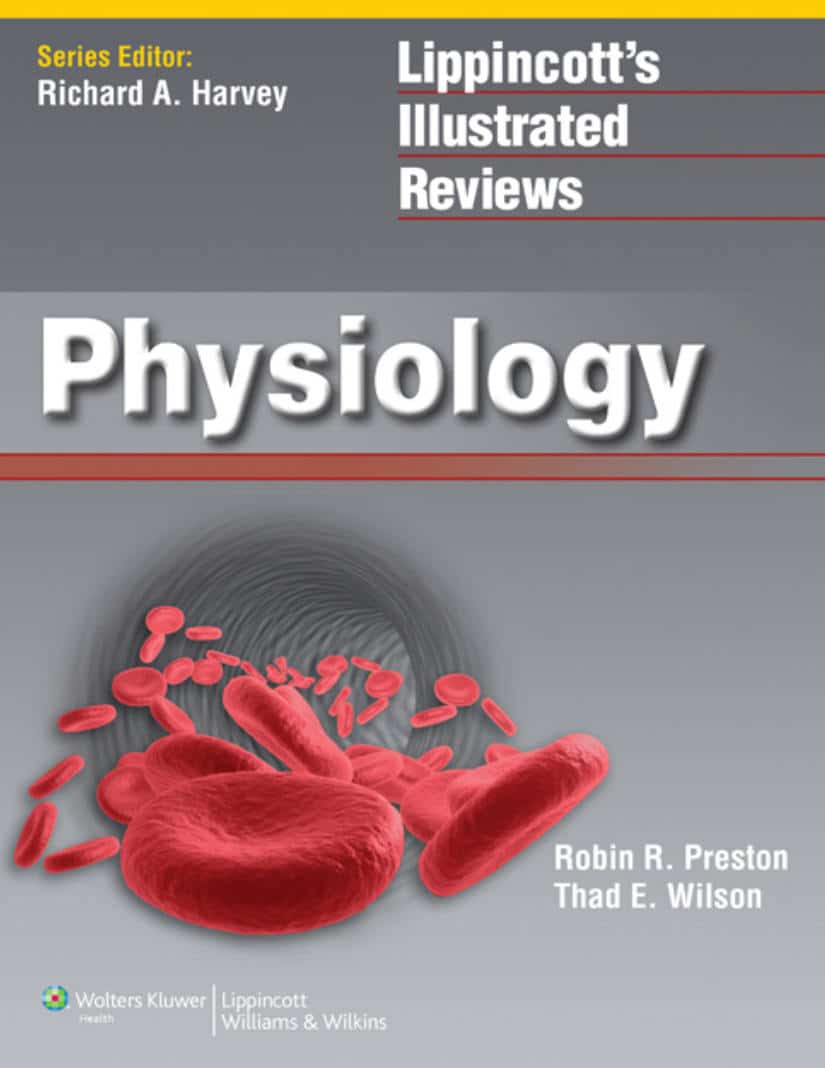
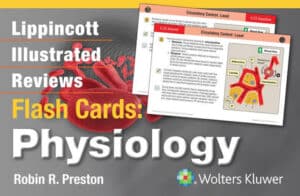
Lippincott’s Illustrated Reviews: Physiology brings physiology clearly into focus, telling the story of who we are, how we live, and, ultimately, how we die. By first identifying organ function and then showing how cells and tissues are designed to fulfill that function, Lippincott Illustrated Reviews: Physiology decodes this discipline like no other text or review book. Each element was tailored for ease of use and fast content absorption, all combining to bring this story to life for readers. Visionary artwork, Clinical Applications, and Unit Review Questions teach and reinforce the most essential concepts in physiology—perfect for classroom learning and test/boards preparation!
More than 600 lively, full-color illustrations, the hallmark of the series, painstakingly, and often humorously, guide readers step by step through complex processes.
Overviews and Chapter Summaries set clear goals for topic mastery and reemphasize essential concepts from each chapter in a coherent framework.
Clinical Applications boxes and clinical images encourage readers to apply their knowledge, taking them from the classroom to the bedside.
Margin Example Equation boxes and in-text boxes highlight memorable information and keep physiology in a real-world context.
Consistent outline format makes critical information easy to access and assimilate.
Cross references and Infolinks to topics within this book are keyed to page headers to expedite location and are also provided for topics in other books in the series for an interdisciplinary grasp of key concepts.
Unit-review questions in board-review style test understanding of fundamental concepts as well as the ability to draw connections among multiple organ systems.
Bonus Material:
Full-color animations that bring physiologic concepts to life.
USMLE and COMLEX-style questions and online access to an online e-book.
Study resources include a map cross-referencing to BRS Physiology that gives users a more complete explanation of difficult concepts.
Table of Contents
Table of Contents:
UNIT I: Principles of Physiologic Function
Chapter 1: Cell and Membrane Physiology
Chapter 2: Membrane Excitability
Chapter 3: Osmosis and Body Fluids
Chapter 4: Epithelial and Connective Tissue
UNIT II: Sensory and Motor Systems
Chapter 5: Nervous System Organization
Chapter 6: Central Nervous System
Chapter 7: Autonomic Nervous System
Chapter 8: Vision
Chapter 9: Hearing and Balance
Chapter 10: Taste and Smell
Chapter 11: Motor Control Systems
UNIT III: Musculoskeletal and Integumental Physiology


![Ettinger’s Textbook of Veterinary Internal Medicine 9th Edition [True PDF+Videos]](https://www.vet-ebooks.com/wp-content/uploads/2024/10/ettingers-textbook-of-veterinary-internal-medicine-9th-edition-100x70.jpg "Ettinger’s Textbook of Veterinary Internal Medicine 9th Edition [PDF+Videos]")