Home Blog Page 153

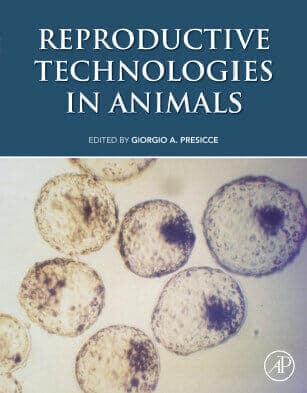
Reproductive Technologies in Animals

Reproductive Technologies in Animals

Reproductive Technologies In Animals Pdf

By Giorgio A. Presicce

Reproductive Technologies in Animals PDF Book provides the most updated and comprehensive knowledge on the various aspects and applications of reproductive technologies in production animals as well as companion, wild, exotic, and laboratory animals and birds. The text synthesizes historical information and recent discoveries, while dealing with economical and geographical issues related to the implementation of the same technologies. It also presents the effects of reproductive technology implementation on animal welfare and the possible threat of pathogen transmission.

Reproductive Technologies in Animals is an important resource for academics, researchers, professionals in public and private animal business, and students at the undergraduate and graduate levels, as it gives a full and detailed first-hand analysis of all species subjected to the use of reproductive technologies.

  • Provides research from a team of scientists and researchers whose expertise spans all aspects of animal reproductive technologies
  • Addresses the use of reproductive technologies in a wide range of animal species
  • Offers a complete description and historical background for each species described
  • Discusses successes and failure as well as future challenges in reproductive technologies
Table of Contents

1. Reproductive Technologies in Cattle
James Richard Pursley and Jose Cibelli

2. Reproductive Technologies in the Equine
Marina Sansinena

3. Reproductive Technologies in Sheep
Salvatore Naitana and Sergio Ledda

4. Reproductive Technologies in Goats
Maria Teresa Paramio, Dolors Izquierdo and Sandra Soto-Heras

5. Reproductive Technologies in Swine
Joaquin Gadea, Pilar Coy, Carmen Matas, Raquel Romar and Sebastian Canovas

6. Reproductive Technologies in the Buffalo
Bianca Gasparrini, Giorgio A. Presicce, Gianluca Neglia, Riccardo Negrin and Luigi Zicarelli

7. Reproductive Technologies for the Conservation of Wildlife and Endangered Species
Gabriela Mastromonaco

8. Reproductive Technologies in Camelids
Julian A. Skidmore, Clara Malo, Elizabeth Crichton, Nisar Wani, Muren Herrid and Jane Vaughan

9. Reproductive Technologies in Companion Animals
Gaia Cecilia Luvoni, Maria Giorgia Morselli and Martina Colombo

10. Reproductive Technologies in Laboratory Animals
Takehito Kaneko and Wiebke Garrels

11. Standard and innovative reproductive biotechnologies for the development of finfish farming
Jennie Risopatrón Gonzales, Osvaldo Merino Painen, Jorge Farías Avendaño, Iván Valdebenito Isler, Leydy Yasmin Sandoval Vargas and Elías E. Figueroa Figueroa Villalobos

12. Reproductive Technologies in nonhuman primates
Shihua Yang and Zulqarnain Baloch

13. Reproductive Technologies in Avian Species
Judit Barna, Krisztina Liptoi, Eszter Patakiné Várkonyi and Barbara Vegi

14. Reproductive Technologies in the Honey Bee
Ajda Moskric, Giovanni Formato, Maja Ivana Smodis Skerl and Janez Presern

15. Spermatogonial Stem Cells: from Mouse to Dairy Goat
Jinlain Hua, John Clotaire Daguia Zambe and Yudong Wei

16. Reproductive technologies and pathogen transmission
Julie Gard

Get This Book

This Book is Avaiable for Members

Access this book instantly with a Premium membership

📄 PDF Format
⚡ Instant Delivery
Unlock Premium Access

Tuberculosis in Animals: An African Perspective

Tuberculosis in Animals: An African Perspective

Tuberculosis In Animals An African Perspective

By Asseged B. Dibaba, Nicolaas P. J. Kriekand Charles O. Thoen

Tuberculosis in Animals: An African Perspective Book PDF recounts the biology of M. bovis, followed by the status of bovine Tuberculosis (bTB) in African countries, primarily based on zoonotic and epidemiological field reports. Since the accumulation of data is valueless unless it led to practicable control measures, emphasis is put on locally adapted protocols for future control of the disease. In order to systematically evaluate the knowledge base of bTB, Epidemiologic Problem Oriented Approach (EPOA) methodology was used. The methodology is composed of two triads: i) the problem identification/characterization triad, which is mainly descriptive in nature, and ii) the problem management/solution/mitigation triad, which is mainly geared toward problem management/solution (see figure). The first triad comprises three pillars: i) agent ii) host, and iii) environment and the second one: i) therapeutics/treatment, ii) prevention/control, and iii) health maintenance/promotion. The two triads are linked together by the diagnostic procedure linkage. The systematic and detailed studies of the ‘Host-Agent-Environment’ interactions are the building blocks to the understanding of agent transmission pathways and disease spread. These may include data about the disease status of the country, the nature of the disease agent and its hosts, the modes of transmission, the wildlife reservoirs in nature, persistence of infection, and agent survival in animal products and the environment. The problem identification and characterization triad identifies these interactions. Once a problem has been identified and well understood, the next step is to minimize the risk of transmission and spread of a disease. This area, referred to as problem solution/management triad, consists of problem management alternatives that rely upon prevention/control, and health maintenance/promotion of the disease in livestock, wildlife, and humans with the emphasis on resource-poor, developing countries in Africa.

Get This Book

File Size 11.4 MB
File Format PDF
Download  link Download Now | Go Premium, Unlock All Books
Useful Links: Support | Browse All Categories
Join Telegram Channel: Telegram

Horse Genetics, 3rd Edition

Horse Genetics, 3rd Edition

Horse Genetics 3Rd Edition

By Ernest Bailey and Samantha A. Brooks

Horse Genetics, 3rd Edition PDF describes the basic genetics of the horse including coat colour, parentage, medical and population genetics, cytogenetics, performance, breeding systems and genetic conservation, as well as the many recent advances in genomics.

New for the third edition:
– More information on genomics and biology have been included
– There are two additional chapters on genetics with respect to infectious diseases and reproduction
– Expanded sections on quantitative genetics and genomic selection provide comprehensive coverage
– Many new figures further illustrate key points in the text
– Redesigned in colour throughout and keeping the popular features of previous editions

This authoritative text remains one of the key sources of information for basic genetic principles and their specific applications to the horse, and is essential for students of equine studies, animal breeding and veterinary science, as well as horse breeders and owners.

Table of Contents

1: Nature of Breeds

2: Evolution and Domestication

3: Equus

4: Fundamentals of Genetics

5: The Language of Genetics

6: Genomics

7: Black, Bay, and Chestnut (Extension and Agouti)

8: Color Diluting Genes

9: Tobiano, White, Sabino and Roan (KIT)

10: Frame Overo and Splashed White

11: Leopard Complex

12: Gray, Brindle, Curly and Tiger Eye

13: Putting it All Together: Color By Design

14: Parentage Testing

15: Blood Groups and Neonatal Isoerythrolysis

16: Medical Genetics

17: Cytogenetics

18: Major Genes, Quantitative Trait Loci and Marker Assisted Selection

19: Complex Traits

20: Pedigrees and Breeding Schemes

21: Microbiome and Mitochondria

22: Where Do We Go From Here?

Get This Book

This Book is Avaiable for Members

Access this book instantly with a Premium membership

📄 PDF Format
⚡ Instant Delivery
Unlock Premium Access

Reproductive Technologies in Farm Animals 2nd Edition

Reproductive Technologies in Farm Animals 2nd Edition PDF

Reproductive Technologies in Farm Animals 2nd Edition

Reproductive Technologies In Farm Animals 2Nd Edition Pdf

By I. Gordon

Reproductive Technologies in Farm Animals, 2nd Edition PDF has been totally updated and revised to provide an up to date account of the key techniques employed in manipulating reproduction in farm animals, including beef and dairy cattle, pigs, sheep, goats, buffaloes, camelids, horses and poultry.

A classic introductory text to the subject, the book is based on a comprehensive review of the current literature. It:

  • outlines different agricultural systems and explores the ethical implications of modern farming methods;
  • details the many new developments, including the commercial application of sexed semen and large-scale application of in vitro produced cattle embryos;
  • provides a valuable synopsis of current and future reproductive technologies, such as cloning and the production of transgenic animals.

Reproductive Technologies in Farm Animals 2nd Edition PDF remains key reading for students in animal science, agriculture, veterinary medicine and biology, and veterinary practitioners and farmers who wish to keep updated on developments in techniques that may be useful in their daily practice.

Table of Contents

1: Introduction

2: Artificial Insemination

3: Embryo Transfer

4: In Vitro Embryo Production

5: Controlling Oestrus and Ovulation

6: Controlling Post-partum Ovarian Activity

7: Control of Seasonal Breeding

8: Controlling Multiple Births and Litter Size

9: Pregnancy Testing Technology

10: Controlling Parturition

11: Controlling the Onset of Puberty

12: Production of Clones and Transgenics

13: Suppressing Reproductive Activity

Get This Book

This Book is Avaiable for Members

Access this book instantly with a Premium membership

📄 PDF Format
⚡ Instant Delivery
Unlock Premium Access

555 Questions in Veterinary and Tropical Parasitology

555 Questions in Veterinary and Tropical Parasitology

555 Questions In Veterinary And Tropical Parasitology

By Hany Elsheikha and Xing-Quan Zhu

Parasites are a major issue affecting animal and human health, welfare, and economic productivity. This book provides 555 questions to test your knowledge of animal and tropical parasitology, to help you study anywhere, with any amount of time.

  • Covers the most important and the most neglected parasites in a concise manner.
  • Questions address parasite biology, epidemiology, diagnostics and management, all in relation to animal health.
  • Includes key zoonotic parasites and their impact on human health.
  • Uses multiple choice questions, true or false statements, fill-in-the-blanks, and more, to enable independent learning and self-testing.
  • Provides explanatory answers to aid further revision and study.
  • A self-test resource for veterinary and animal science students that is also of interest to medical students interested in parasitology or zoonoses, this book provides a convenient, useful, and current source of information to anyone interested in learning, revising and assessing their knowledge in parasitology.
Table of Contents

  • 1: Multiple Choice Questions
  • 2: Matching Questions
  • 3: Fill-In-The-Blank Questions
  • 4: True or False Questions
  • 5: Image-Based Questions

Get This Book

This Book is Avaiable for Members

Access this book instantly with a Premium membership

📄 PDF Format
⚡ Instant Delivery
Unlock Premium Access

Canine and Feline Gastroenterology

Canine and Feline Gastroenterology PDF

Canine and Feline Gastroenterology

Canine And Feline Gastroenterology Pdf

By Michael J. Day and Robert J. Washabau

A comprehensive reference standard for the discipline, Canine and Feline Gastroenterology PDF covers the biology, pathobiology, and diagnosis and treatment of diseases of the gastrointestinal, pancreatic, and hepatobiliary systems. An international team of experts, including 85 authors from 17 different countries, led by Robert Washabau and Michael Day, covers everything from minor problems such as adverse food reactions to debilitating inflammatory, infectious, metabolic, and neoplastic diseases of the digestive system. This authoritative text utilizes an evidence-based approach to reflect the latest science and research, complemented by principles of problem solving, algorithms to improve clinical diagnoses, and extensive full-color illustrations. For generalists and specialists alike, this gastroenterology reference should be part of every serious practitioner’s professional library.

  • A comprehensive, 928-page reference standard covers the discipline of canine and feline gastroenterology.
  • An international focus is provided by 85 authors from 17 different countries, including renowned experts in veterinary gastroenterology, internal medicine, pathology, clinical pathology, radiology, and infectious disease.
  • Coverage of the entire breadth and depth of gastroenterology ranges from biology to pathobiology, as well as diagnosis and treatment of diseases of the gastrointestinal, pancreatic, and hepatobiliary systems.
  • Current information on GI microflora, immunology, cellular growth, and systems integration provides a foundation for treating clinical problems.
  • Coverage of diseases in dogs and cats includes the oral cavity, esophagus, stomach, small intestine, large intestine, colon, anorectum, liver and biliary tract, exocrine pancreas, peritoneum, and associated vasculature.
  • A focus on patient management examines the full range of procedures and techniques essential to diagnosis and treatment from clinical signs and diagnosis to nutritional support and pharmacologic management of disease.
  • Clear explanations of current diagnostic modalities include laboratory tests, molecular methods, diagnostic imaging, endoscopy, and histopathology, also showing how to interpret and utilize results.
  • A strong clinical approach emphasizes need-to-know information for managing the common and not-so-common G.I. clinical problems of everyday practice.
  • Full-color photographs and illustrations depict concepts, conditions, and procedures.
  • An evidence-based medicine perspective reflects the latest research as well as the modern practice of veterinary medicine.
  • Logical, coherent, and consistent internal organization makes this a reader-friendly edition.
  • Problem-based algorithms help in diagnosing every G.I. clinical problem from A to Z.
  • A stand-alone section on the pharmacologic approach to G.I. disease offers quick and easy drug reference.

Table of Contents

Section I: Biology of the Gastrointestinal Tract, Pancreas, and Liver

    1. Integration of Gastrointestinal Function
    2. Gastrointestinal Microflora
    3. Gastrointestinal Immunology
    4. Gastrointestinal Inflammation
    5. Cellular Growth/Neoplasia

Section II: Approach to Clinical Signs in Gastrointestinal Disease

    1. Abdominal Pain
    2. Anorexia
    3. Ascites
    4. Coagulopathy
    5. Constipation
    6. Diarrhea
    7. Dyschezia and Tenesmus
    8. Dysphagia and Gagging
    9. Fecal Incontinence
    10. Gastrointestinal Gas
    11. Hemorrhage (Gastrointestinal)
    12. Hepatoencephalopathy
    13. Icterus
    14. Polyphagia
    15. Polyuria/Polydipsia
    16. Regurgitation
    17. Salivation
    18. Vomiting
    19. Weight Loss & Cachexia

Section III: Diagnostic Approach to Gastrointestinal, Pancreatic, and Hepatobiliary Problems

    1. Laboratory Approach
    2. Diagnostic Imaging of the Gastrointestinal Tract
    3. Endoscopy
    4. Laparoscopy
    5. Histopathology

Section IV: Nutritional Approach to Gastrointestinal Disease

    1. Nutritional Assessment and Management
    2. Adverse Reactions to Food
    3. Nutritional Strategies
    4. Enteral and Parenteral Nutrition

      Section V: Pharmacologic Approach to Gastrointestinal Disease
    5. Antidiarrheal Agents
    6. Antiemetic Agents
    7. Antifungal Drugs
    8. Antihelmintic Agents
    9. Antiinflammatory Agents
    10. Antimicrobial Agents
    11. Antioxidant Drugs
    12. Antispasmodic Agents
    13. Behavioral Modification
    14. Chelating Agents
    15. Chemotherapy
    16. Cytoprotection – Gastric
    17. Cytoprotection – Liver/Biliary
    18. Enzyme Supplementation
    19. Fluid Therapy
    20. Immunosuppressive Drugs
    21. Laxative Agents
    22. Probiotic Agents
    23. Prokinetic Agents
    24. Vitamins and Minerals

Section VI: Diseases of the Gastrointestinal Tract

  1. Oropharynx
  2. Esophagus
  3. Stomach
  4. Small Intestine
  5. Large Intestine
  6. Anorectum
  7. Pancreas
  8. Liver
  9. Breed-Relationships

Get This Book

This Book is Avaiable for Members

Access this book instantly with a Premium membership

📄 PDF Format
⚡ Instant Delivery
Unlock Premium Access

Routledge Handbook of Animal Ethics

Routledge Handbook of Animal Ethics

Routledge Handbook Of Animal Ethics

There isn’t one conversation about animal ethics. Instead, there are several important ones that are scattered across many disciplines.This volume both surveys the field of animal ethics and draws professional philosophers, graduate students, and undergraduates more deeply into the discussions that are happening outside of philosophy departments. To that end, the volume contains more nonphilosophers than philosophers, explicitly inviting scholars from other fields—such as animal science, ecology, economics, psychology, law, environmental science, and applied biology, among others—to bring their own disciplinary resources to bear on matters that affect animals.

The Routledge Handbook of Animal Ethics is composed of 44 chapters, all appearing in print here for the first time, and organized into the following six sections:

I. Thinking About Animals

II. Animal Agriculture and Hunting

III. Animal Research and Genetic Engineering

IV. Companion Animals

V. Wild Animals: Conservation, Management, and Ethics

VI. Animal Activism

The chapters are brief, and they have been written in a way that is accessible to serious undergraduate students, regardless of their field of study. The volume covers everything from animal cognition to the state of current fisheries, from genetic modification to intersection animal activism. It is a resource designed for anyone interested in the moral issues that emerge from human interactions with animals.

Table of Contents


Introduction  Bob Fischer

Part I: Thinking about Animals

1. Psychological Mechanisms Involved in Human– Animal Interactions: How Do Humans Cognize About Animals

Catherine Amiot and Brock Bastian

2. Understanding the Moral Implications of Morgan’s Canon  Maria Botero

3. Animal Intelligence  John Pearce

4. The Emotional Lives of Animals  Tina Horback

5. Animal Self-Awareness: Types, Distribution, and Ethical Significance  David DeGrazia

6. The Moral Animal  Mark Rowlands

7. Quantifying Animal Well-Being and Overcoming the Challenge of Interspecies Comparisons  Mark Budolfson and Dean Spears

8. Cost-Effectiveness in Animal Health: An Ethical Analysis  Govind Persad

Part II: Animal Agriculture and Hunting

9. The Origins of Factory Farming in the United States: An Overview  James McWilliams

10. The Economics of Intensive Animal Agriculture  F. Bailey Norwood

11. Animal Welfare—Is Intensification the Problem?  Joy Mench

12. Intensive Animal Agriculture and the Environment  Lisa Kemmerer

13. Intensive Animal Agriculture and Human Health  Jonathan Anomaly

14. Seafood Ethics: Reconciling Human Well-being with Fish Welfare  Mimi Elizabeth Lam

15. Small-Scale Animal Agriculture  Donald Bruckner

16. Subsistence Hunting  Raymond Anthony and Gary Varner

Part III: Animal Research and Genetic Engineering

17. Institutionalized Ethical Assessments of Animal Experiments  Bernice Bovenkerk and Lonneke Poort

18. Animal Models: Problems and Prospects  Pandora Pound

19. Applied Ethics in Animal Experimentation  Larry Carbone

20. Genetic Engineering of Nonhuman Animals  Adam Shriver

21. Building Ethical De-extinction Programs: Considerations of Animal Welfare in Genetic Rescue  Ben Novak

Part IV: Companion Animals

22. From Pets to Companion Animals: A History  Katherine Grier

23. The Ethics of Domestication  Jessica du Toit

24. The Ethics of Keeping Pets  Jessica Pierce

25. The Ethics of Companion Animal Euthanasia  Christine Overall

26. Links Between Violence Against Humans and Nonhuman Animals: Examining the Role of Adverse Family Environments  Shelby Elaine McDonald

Part V: Wild Animals: Conservation, Management, and Ethics

27. Zoos and Aquariums Committing to Integrated Species Conservation  Mark Gusset

28. The Educational Value of Zoos: An Empirical Perspective  Nancy Staus

29. Moral Arguments Against Zoos  Karen S. Emmerman

30. Defensible Zoos and Aquariums  Clare Palmer, Hamish Morrin, and Peter Sandøe

31. Killing for conservation: Ethical considerations for controlling wild animals  Sara Dubois

32. Ethical dimensions of invasive animal management  Tim S. Doherty and James C. Russell

33. Property, Regulation, and Endangered Species Conservation  Steven McMullen

34. The Laissez-Faire View: Why We’re Not Normally Required to Assist Wild Animals  Clare Palmer

35. Welfare Biology  Catia Faria and Oscar Horta

36. Wild Animals as Political Subjects  John Hadley

Part VI: Animal Activism

37. The History of Animal Activism: Intersectional Advocacy and the American Humane Movement  Janet M. Davis

38. The Political and Cultural Sociology of Animal Advocacy  Erin M. Evans

39. Beyond Compare: Intersectionality and Interspecieism for Co-Liberation with Other Animals  Nekeisha Alayna Alexis

40. Political Lobbying for Animals  Joanna Grossman

41. Effective Animal Advocacy  Jeff Sebo

42. Cultured Meat: A New Story for the Future of Food  Max Elder

43. Veganism, (Almost) Harm-Free Animal Flesh, and Nonmaleficence: Navigating dietary ethics in an unjust world  Cheryl Abbate

44. Animal Sanctuaries  Elan Abrell

Get This Book

This Book is Avaiable for Members

Access this book instantly with a Premium membership

📄 PDF Format
⚡ Instant Delivery
Unlock Premium Access

Practical Physiotherapy for Veterinary Nurses

Practical Physiotherapy for Veterinary Nurses

Practical Physiotherapy For Veterinary Nurses

By Donna Carver

Practical Physiotherapy for Veterinary Nurses Book PDF. Reflecting a rapidly growing area of interest in veterinary practice, this practical, pocket-sized guide to small animal physiotherapy has been designed for quick reference, providing the ideal guide for busy practice veterinary nurses when they really need it.

  • Reflects the need for a text in this rapidly growing area of interest, providing the first on this topic for veterinary nurses
  • Designed in a pocket-sized format so that VNs can carry it around for quick reference
  • The author has ideal experience for this field, having worked as both a veterinary nurse and an animal physiotherapist
  • This book is accompanied by a companion website which contains videos and self-test questions and answers
Table of Contents

Acknowledgements, vii

About the companion website, ix

1 Musculoskeletal physiotherapy 1

Introduction 1

Gait analysis 2

History taking 5

Physical examination 6

Exercise plans 7

Physiotherapy treatment techniques and modalities 8

Musculoskeletal presenting conditions 24

Pain management 75

Physiotherapy musculoskeletal assessment 79

Self]assessment questions 86

2 Neurology 89

Introduction 89

Surgical presenting conditions 91

Non]surgical presenting conditions 116

Medical neurological presenting conditions 125

Neurological assessment 136

Physiotherapy assessment for the neurology patient 142

Self]assessment questions 148

3 Respiratory physiotherapy 151

Introduction 151

Chest auscultation and interpretation 152

Contents

Percussion note technique and interpretation 153

Interpretation of blood gases 154

Respiratory failure 154

Cardiorespiratory monitoring 156

Electrocardiograms 158

Respiratory presenting conditions 160

Respiratory physiotherapy treatment techniques 164

Self]assessment questions 181

4 Hydrotherapy 185

Introduction 185

The aims of hydrotherapy 185

Pool chemistry 187

Properties of water 188

Hydrotherapy for specific conditions 189

Self]assessment questions 202

Appendices 205

Abbreviations 209

References 211

Self-assessment answers 213

Index 219

Get This Book

This Book is Avaiable for Members

Access this book instantly with a Premium membership

📄 PDF Format
⚡ Instant Delivery
Unlock Premium Access

Practical Physiotherapy for Small Animal Practice

Practical Physiotherapy for Small Animal Practice PDF

Practical Physiotherapy for Small Animal Practice

Practical Physiotherapy For Small Animal Practice Pdf

By David Prydie and Isobel Hewitt

Practical Physiotherapy for Small Animal Practice PDF provides a concise and accessible introduction to physiotherapy that demonstrates its benefits to both veterinary patients and practitioners.  One of the fastest growing specialties in veterinary medicine, this book will help you to successfully introduce physiotherapy into your practice improving rehabilitation and recovery of dogs and cats.

  • Covers an array of different treatments and techniques, such as manual therapies, therapeutic exercise, electrotherapy, and hydrotherapy
  • Includes practical advice on selecting equipment, examinations, treatment protocols, and charging
  • Offers strategies for introducing physiotherapy into the practice schedule, including space and staffing requirements
Table of Contents

About the authors vii

Preface ix

Acknowledgements xi

About the companion website xiii

1 Introduction 1

2 Anatomy: structure and function of the musculoskeletal system 7

3 Healing 29

4 Clinical examination 47

5 Modalities 69

6 Manual therapies 91

7 Common neurological conditions and their rehabilitation 115

8 Therapeutic exercise 147

9 Splints supports and aids 195

10 Pain 211

11 Treatment protocols 225

12 Setting up a physiotherapy clinic 259

Appendix 1 Nomenclature 279

Appendix 2 Regenerative medicine 281

Appendix 3 Further reading 283

Appendix 4 Useful websites for aids and equipment 285

Index 287

Get This Book

This Book is Avaiable for Members

Access this book instantly with a Premium membership

📄 PDF Format
⚡ Instant Delivery
Unlock Premium Access

Clinical Immunology of the Dog and Cat 2nd Edition

Clinical Immunology of the Dog and Cat 2nd Edition PDF

Clinical Immunology of the Dog and Cat 2nd Edition

Clinical Immunology Of The Dog And Cat 2Nd Edition Pdf

By Michael J. Day

Clinical Immunology of the Dog and Cat 2nd Edition PDF. The First Edition of this book (1999) was greeted by critical acclaim, became a bestseller and was translated into many languages. It proved useful for veterinarians in general practice who may have had limited exposure to the subject of immunology in training to help translate theory into clinical practice. The book details the manifestations, diagnosis and treatment of immune-related disease in the dog and cat. It is illustrated throughout in full colour, to show and explain to the reader as clearly as possible the complicated principles of disease and immunodiagnostic tests, supported by clinical cases, gross and histopathology, cytology, haematology, immunohistochemistry and other immunological tests. Since publication of the First Edition many advances have been made and the Second Edition incorporates these changes in focus and on techniques. There is an additional chapter on respiratory and cardiac disease, and given the continued focus of companion animal practitioners on vaccine-related issues, a new chapter is devoted entirely to the subject of vaccinology. The Second Edition includes approximately 200 new photographic images, an updated list of further reading and an extensive glossary of terms.

Table of Contents

Glossary.

1. Basic Immunology

2. Immunopathological Mechanisms

3. The Basis of Immune-Mediated Disease

4. Immune-Mediated Haematological Disease (with A. J. Mackin)

5. Immune-Mediated Skin Disease (with S. E. Shaw)

6. Immune-Mediated Musculoskeletal and Neurological Disease (with D. Bennett)

7. Immune-Mediated Alimentary Disease (with E. J. Hall)

8. Immune-Mediated Respiratory and Cardiac Disease

9. Immune-Mediated Endocrine Disease (with S. E. Shaw)

10. Immune-Mediated Renal and Reproductive Disease (with A. J. Mackin)

11. Immune-Mediated Ocular Disease (S. M. Crispin)

12. Immunodeficiency Disease

13. Immune System Neoplasia (with J. M. Dobson)

14. Multisystem and Intercurrent Immune-Mediated Disease

15. Disease, of the Lymphoid Tissue

16. Immunotherapy

17. Vaccination. Further reading.

Index.

Get This Book

This Book is Avaiable for Members

Access this book instantly with a Premium membership

📄 PDF Format
⚡ Instant Delivery
Unlock Premium Access