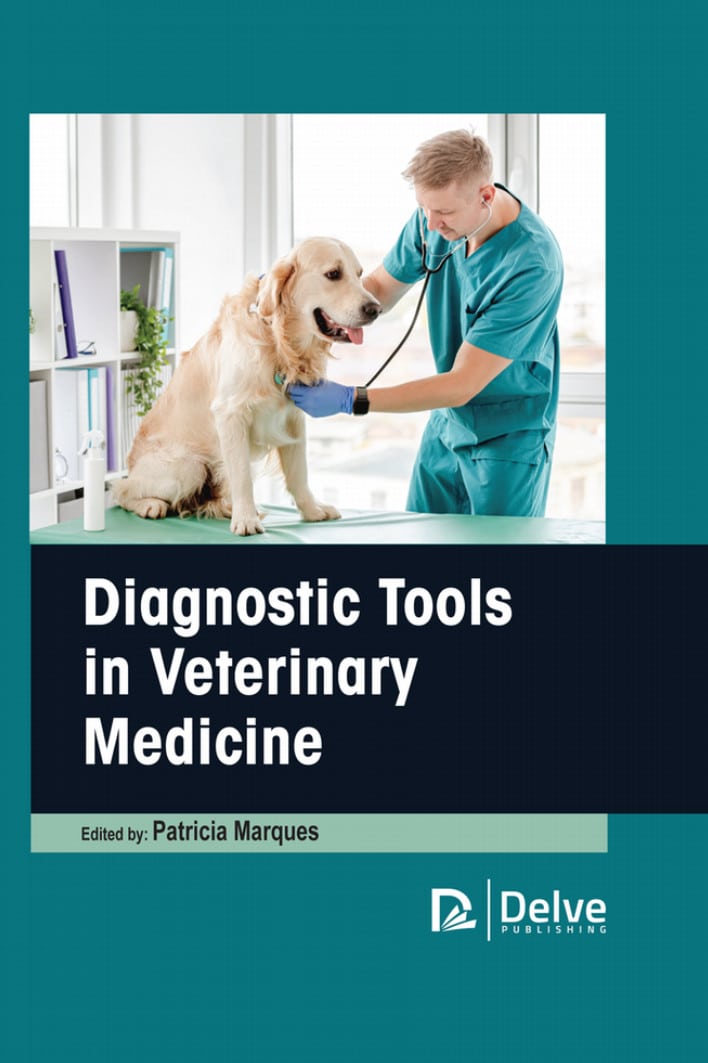
Diagnostic Tools in Veterinary Medicine Book focuses on the key components of the veterinary diagnostic system: vet laboratory, vet devices, and veterinary diagnostic test kits. Traditionally, laboratory diagnostics for veterinary pathogens have relied on methods of detecting the pathogen by culture or antibodies, using varied techniques, such as neutralization, Enzyme-linked Immunosorbent Assay (ELISA), agar gel immunodiffusion, and complement fixation.
Over the years, veterinarians have incorporated new molecular diagnostic techniques, such as Polymerase Chain Reaction (PCR) and Western blot, as well as improved older techniques by using recombinant antigens, monoclonal antibodies, and synthetic peptides. Despite the routine use of conventional diagnostic assays, new molecular techniques have enabled veterinarians to use new tools for rapid and specific diagnosis of animal disease in real-time. The globalization of trade in animals and animal products is a major driver for the improvement of the analytical and diagnostic quality of tests.
Chapter 1: Identifying an Outbreak of a Novel Swine Disease using Test Requests for Porcine Reproductive and Respiratory Syndrome as a Syndromic Surveillance Tool
Chapter 2: Syndromic Surveillance Using Veterinary Laboratory Data: Algorithm Combination and Customization of Alerts
Chapter 3: A Focused Ethnographic Study of Alberta Cattle Veterinarians’ Decision Making about Diagnostic Laboratory Submissions and Perceptions of Surveillance Programs
Chapter 4: Exploratory Analysis of Methods for Automated Classification of Laboratory Test Orders into Syndromic Groups in Veterinary Medicine
Serology
Chapter 5: Getting More Out of Less – A Quantitative Serological Screening Tool for Simultaneous Detection of Multiple Influenza A Hemagglutinin-Types in Chickens
Chapter 6: Serological Diagnostic Potential of Recombinant Outer Membrane Proteins (rOMPs) from Brucella Melitensis in Mouse Model using Indirect Enzyme-linked Immunosorbent Assay
Immunoassays
Chapter 7: Comparison of a Flow Assay for Brucellosis Antibodies with the Reference CELISA Test in West African Bos indicus
Tissue Culture
Chapter 8: Proof of Concept of Faecal Egg Nematode Counting as a Practical Means of Veterinary Engagement with Planned Livestock Health Management in a Lower Income Country
Chapter 9: Diagnosis of Bacterial Urinary Tract Infection: Utility of Urine Myeloperoxidase Concentration to Predict Urine Culture Results in Dogs
Diagnostic using PCR and Sequencing Techniques
Chapter 10: Transcriptomic Markers Meet the Real World: Finding Diagnostic Signatures of Corticosteroid Treatment in Commercial Beef Samples
Chapter 11: A Molecular Diagnostic Tool to Replace Larval Culture in Conventional Faecal Egg Count Reduction Testing in Sheep
Chapter 12: BeeDoctor, a Versatile MLPA-Based Diagnostic Tool for Screening Bee Viruses
Diagnosis by Imaging
Chapter 13: Confocal Laser Scanning Microscopy, a New in Vivo Diagnostic Tool for Schistosomiasis
Chapter 14: Rhinoceros Feet Step Out of a Rule-of-Thumb: A Wildlife Imaging Pioneering Approach of Synchronized Computed Tomography-Digital Radiography
Chapter 15: International Veterinary Epilepsy Task Force Consensus Reports on Epilepsy Definition, Classification and Terminology, Affected Dog Breeds, Diagnosis, Treatment, Outcome Measures of Therapeutic Trials, Neuroimaging and Neuropathology in Companion Animals
Mass Spectrometry
Chapter 16: Quantitative and Selective Analysis of Feline Growth Related Proteins Using Parallel Reaction Monitoring High Resolution Mass Spectrometry
Chapter 17: MALDI-TOF Mass Spectrometry as a Diagnostic Tool in Human and Veterinary Helminthology: A Systematic Review
Chapter 18: Peptide Barcodes in Dogs affected by Mitral Valve Disease with and without Pulmonary Hypertension using MALDI-TOF MS and LC-MS/MS
Specific Instruments for Veterinary Diagnosis
Chapter 19: Diagnostic Accuracy of a Short-duration 3 Tesla Magnetic Resonance Protocol for Diagnosing Stifle Joint Lesions in Dogs with Non-traumatic Cranial Cruciate Ligament Rupture
Chapter 20: Evaluation of a New Portable 1-lead Digital Cardiac Monitor (eKuore) compared with Standard Base-apex Electrocardiography in Healthy Horses
Machine Learning and AI
Chapter 21: Validation of Computerized Diagnostic Information in a Clinical Database from a National Equine Clinic Network
Chapter 22: Proof of Concept of a Workflow Methodology for the Creation of basic Canine head Anatomy Veterinary Education Tool Using Augmented Reality
Other Methods of Diagnosis
Chapter 23: Novel Physico-chemical Diagnostic Tools for High Throughput Identification of Bovine Mastitis Associated Gram-Positive, Catalase-negative Cocci
Chapter 24: The Usefulness of Uterine Lavage and Acute Phase Protein Levels as a Diagnostic Tool for Subclinical Endometritis in Icelandic Mares
Chapter 25: Diagnostic Tools of Caprine and ovine Anaplasmosis: A Direct Comparative Study
Get This Book
This Book is Avaiable for Members
Access this book instantly with a Premium membership










![Ettinger’s Textbook of Veterinary Internal Medicine 9th Edition [True PDF+Videos]](https://www.vet-ebooks.com/wp-content/uploads/2024/10/ettingers-textbook-of-veterinary-internal-medicine-9th-edition-100x70.jpg "Ettinger’s Textbook of Veterinary Internal Medicine 9th Edition")