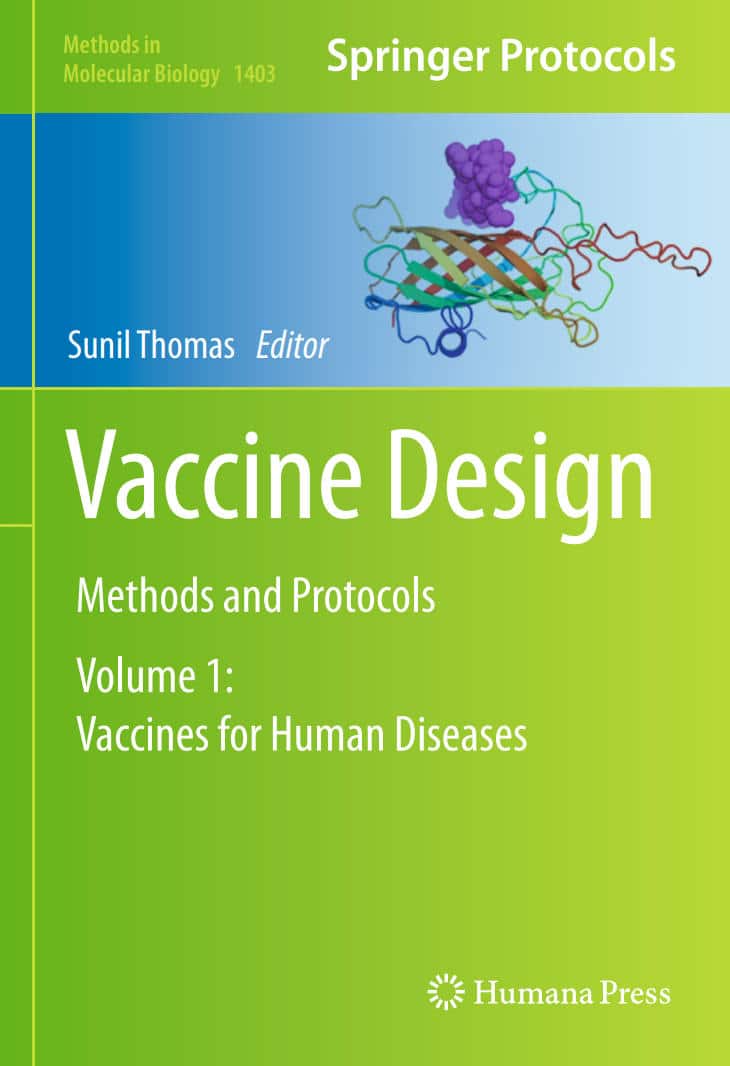
Volume 1: Vaccines for Human Diseases
By Sunil Thomas
This text provides a practical guide providing step-by-step protocol to design and develop vaccines. Chapters detail protocols for developing novel vaccines against infectious bacteria, viruses, fungi, and parasites for humans and animals. Volume 1: Vaccines for Human Diseases has an introductory section on how vaccines impacted diseases, the immunological mechanism of vaccines, future challenges for vaccinologists, and current trends in vaccinology. The design of human vaccines for viral, bacterial, fungal, parasitic and prion diseases as well as vaccines for drug abuse, allergy, and tumor vaccines are also described in this volume. As a volume in the highly successful Methods in Molecular Biology series, chapters contain introductions to their respective topics, lists of the necessary materials and reagents, step-by-step, readily reproducible protocols, and tips on troubleshooting and avoiding known pitfalls.
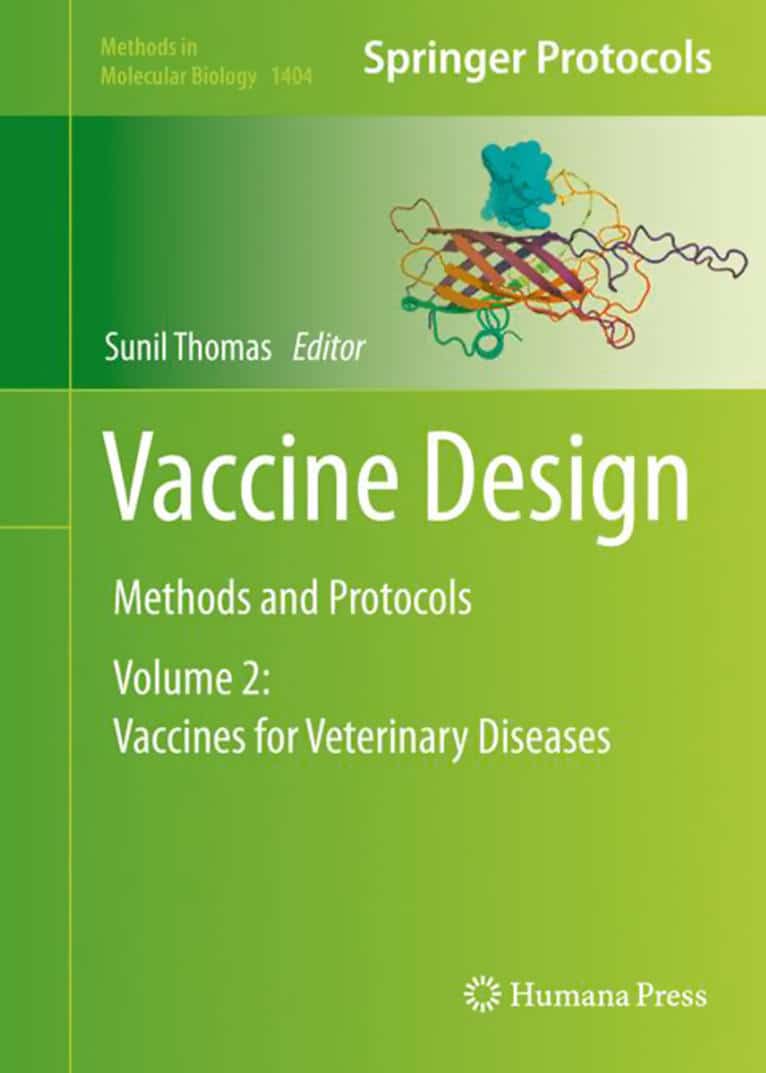
Volume 2: Vaccines for Veterinary Diseases
This text provides a practical guide providing step-by-step protocol to design and develop vaccines. Chapters detail protocols for developing novel vaccines against infectious bacteria, viruses, fungi, and parasites for humans and animals. Volume 2: Vaccines for Veterinary Diseases includes vaccines for farm animals and fishes, vaccine vectors and production, vaccine delivery systems, vaccine bioinformatics, vaccine regulation and intellectual property. Written for the Methods in Molecular Biology series, chapters include introductions to their respective topics, lists of the necessary materials and reagents, step-by-step, readily reproducible laboratory protocols, and tips on troubleshooting and avoiding known pitfalls.
Table of Contents – Volume 1
- Dedication v
- Preface vii
- Contributors xiii
- Part I: Vaccines – Introduction
- 1. Clinical Impact of Vaccine Development – Puja H. Nambiar et al.
- 2. Future Challenges for Vaccinologists – Sunil Thomas et al.
- 3. Principles of Vaccination – Fred Zepp
- Part II: Trends in Vaccinology
- 4. Reverse Vaccinology: From Genomes to Tailored Vaccines
- 5. Systems Vaccinology: Applications and Perspectives
- 6. Proteomic Monitoring of B Cell Immunity
- Part III: Vaccines for Human Viral Diseases
- 7–17. Covers vaccine development for Rabies, CMV, Rift Valley Fever, Hepatitis C, Ebola, Norovirus, SARS-CoV, Tick-Borne Encephalitis, and other emerging viral pathogens.
- Part IV: Vaccines for Human Bacterial Diseases
- 18–29. Includes DNA vaccines, E. coli, Clostridium difficile, Staphylococcus aureus, Chlamydia, Shigella, Meningococcal, Lyme, Plague, and Ehrlichiosis vaccines.
- Part V: Vaccines for Human Fungal Diseases
- 30. Dendritic Cell-Based Fungal Vaccines
- 31. T-Cell Responses Against Pulmonary Coccidioides Infection
- Part VI: Vaccines for Human Parasitic Diseases
- 32–36. Focuses on malaria, leishmaniasis, and hookworm vaccine development.
- Part VII: Vaccines for Prion Diseases
- 37. Methods for Developing Prion Vaccines
- Part VIII: Vaccines for Substance Abuse and Toxins
- 38–39. Ricin- and Hapten-Protein–Based Vaccine Strategies
- Part IX: Vaccines for Allergy
- 40–42. Rice Seed, Mycobacterium Antigen, and Dust Mite Allergy Vaccines
- Part X: Development of Tumor Vaccines
- 43–48. Cancer vaccine approaches: Dendritic cell, T-cell epitope, peptide-based, mRNA-transfected DC, and antibody-targeting tumor vasculature.
- Part XI: Formulation and Stability of Vaccines
- 49. Forced Degradation Studies and Stability Evaluation
- Index 867
Table of Contents – Volume 2
- Part I: Challenges in Veterinary Vaccine Development
- 1. Overview of Veterinary Immunization Challenges
- Part II: Vaccines for Farm Animals
- 2–11. Includes recombinant, DNA, and peptide vaccines for swine, cattle, sheep, poultry, and parasites such as Toxoplasma and Fasciola.
- Part III: Vaccines for Fishes and Shellfish
- 12–16. Covers vaccine development for Pasteurellosis, Nocardiosis, Aeromonas, Betanodavirus, and shrimp viral infections.
- Part IV: Vaccines Against Ticks
- 17–19. Anti-tick vaccines, antigen screening, and vaccinomics approaches for tick control.
- Part V: Vaccine Adjuvants
- 20. CpG ODN-Based Adjuvant Formulations
- Part VI: Vaccine Vectors and Production Systems
- 21–40. Covers DNA scaffolds, adenovirus and alphavirus vectors, phage display systems, plant-based production, and recombinant expression platforms.
- Part VII: Vaccine Delivery Systems
- 41–46. Liposomes, microneedles, PLGA nanoparticles, and bacterial delivery systems.
- Part VIII: Vaccine Bioinformatics
- 47–50. Computational design methods, databases, and immunogenicity prediction platforms.
- Part IX: Vaccine Safety and Regulation
- 51. Regulatory Evaluation of Human Vaccines
- Part X: Vaccine Intellectual Property
- 52–54. Vaccine IP rights, commercialization strategies, and patent law implications.
- Index 849





![Ettinger’s Textbook of Veterinary Internal Medicine 9th Edition [True PDF+Videos]](https://www.vet-ebooks.com/wp-content/uploads/2024/10/ettingers-textbook-of-veterinary-internal-medicine-9th-edition-100x70.jpg "Ettinger’s Textbook of Veterinary Internal Medicine 9th Edition")