Home Blog Page 306

Black’s Veterinary Dictionary, 22nd Edition

Black’s Veterinary Dictionary, 22nd Edition PDF

Black’s Veterinary Dictionary, 22nd Edition

Black’s Veterinary Dictionary, 22Nd Edition Pdf

By Edward Boden , Anthony Andrews

Black’s Veterinary Dictionary, 22nd Edition PDF. Black’s Veterinary Dictionary has been a bestseller for over 80 years. It is an essential reference tool for all with a professional or leisure interest in the care of animals. Much more than a list of veterinary terms, its practical approach ensures that readers gain an insight into the signs and symptoms of common, and less common, diseases, their diagnosis and treatment.
For the 22nd edition much new and updated information has been included, reflecting the numerous developments that have taken place in animal care and husbandry, and welfare. There is greatly expanded coverage of topics relating to popular breeds of dog and cat, and the inheritable conditions that might affect their health.
Advances in medicine, surgery and diagnostic techniques; descriptions of newly identified diseases such as Schmallenberg virus; the resurgence of old scourges such as TB in cattle, and ongoing enzootic infections such as bird flu are included in this new edition.
The growing risk of exotic diseases such as heartworm being imported following the relaxation of travel arrangements for dogs and cats is reflected in new entries. Notes on many new species being farmed or kept as companion animals are among the thousands of topics covered.
Whether your interest is in cats or cattle, horses or hamsters, puppies or pigeons, the A-Z of veterinary matters is covered in Black’s Veterinary Dictionary.

File Size 13 MB
File Format PDF
Download  link Download Now | Go Premium, Unlock All Books
Support & Updates Contact Us | Broken Link
Join Our Telegram Channel Telegram
More Books: Browse All Categories

Get This Book

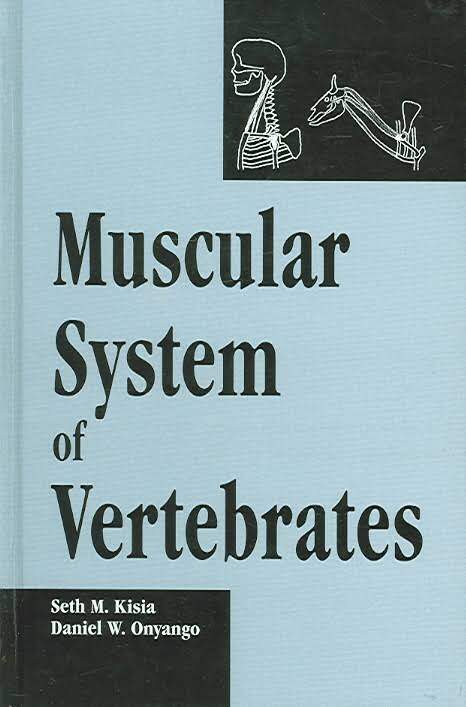
Muscular System of Vertebrates

Muscular System of Vertebrates PDFsystem of vertebrates pdf

Muscular System of Vertebrates

Muscular System Of Vertebrates Pdf

By Seth M. Kisia, Daniel W. Onyango

Muscular System of Vertebrates PDF. An account of the different morphologies of vertebrate respiratory organs and structures. It explains the essence of different functional designs and strategies that have adaptively developed for the acquisition of molecular oxygen and elimination of carbon dioxide. The origins of the various respiratory systems are presented and debated from evolutionary, phylogenetic, behavioural and ecological perspectives. The book carefully outlines the interactions between the environment (the physical realm) and evolution and adaptation (the biological domain) that have set the composition and patterning of extant animal life.

Get This Book

File Size 7.7 MB
File Format PDF
Download  link Download Now | Go Premium, Unlock All Books
Support & Updates Support | Browse All Categories
Join Our Telegram Channel Telegram
More Books: Browse All Categories

Mitochondria, 2nd Edition

Mitochondria 2nd Edition PDF

Mitochondria, 2nd Edition

Mitochondria 2Nd Edition Pdf

By Immo E. Scheffler

Mitochondria 2nd Edition PDF Book is the eagerly awaited second edition of the best-selling Mitochondria, a book widely acknowledged as the first modern, truly comprehensive authored work on the important, scientifically fundamental topic of the cellular organelles known as mitochondria.

This new edition brings readers completely up to date on the many significant findings that have occurred in the eight years since the book was first published. As in that seminal first edition, the second edition tackles the biochemistry, genetics, and pathology of mitochondria in different organisms. The new edition provides thorough updates of all literature concerning this vital organelle, its functions, ongoing research surrounding it, and its importance vis-à-vis a broad range of issues in cellular and molecular biology. The book includes detailed descriptions of current and developing technologies around mitochondrial research and discovery, and highlights subjects that are growing, such as the use of proteomics.

This book is an invaluable resource for all geneticists, biologists, and educators in life sciences. It is also of interest for advanced students in genetics and molecular biology.

Table of Contents

I. HISTORY.

References.

II. EVOLUTIONARY ORIGIN OF MITOCHONDRIA.

References.

III. STRUCTURE AND MORPHOLOGY. INTEGRATION INTO THE CELL.

3.1 Structure and Morphology.

3.2 Integration into the Cell.

3.2.1 Distribution in the Cytosol.

3.2.2 Interaction with Cytoskeleton.

3.3. The dynamics of mitochondrial morpholoy.

3.3.1 Mitochondrial Shape Changes.

3.3.1.1 Fission.

3.3.1.2 Fusion.

3.3.2. Distribution during Cell Division.

3.3.3. During Cell Differentiation.

3.3.4. Turnover and Degradation.

3.3.5. Mitochondrial Alterations in Apoptosis.

3.3.6. Unsolved Problems for the Future.

References.

IV. BIOGENESIS OF MITOCHONDRIA.

4.1 The Mitochondrial Genome.

4.1.1. Introduction.

4.1.2. The Mitochondrial Genome in Metazoans.

4.1.3. The Mitochondrial Genome in Plants.

4.1.4. The Mitochondrial Genome in Fungi.

4.1.5. The Mitochondrial Genome in Kinetoplastid Protozoa.

4.1.6. Mitochondrial Plasmids.

4.1.6.1. Fungal senescence.

4.1.6.2. Phytopathogenicity.

4.1.6.3. Cytoplasmic male sterility (CMS).

4.2 Nuclear Genes encoding Mitochondrial Proteins.

4.2.1. Enzymes Required for Maintenance and Expression of the Mitochondrial.

Genome.

4.2.2. Nucleo-mitochondrial Interactions.

4.2.2.1 Introduction..

4.2.2.2. In Yeast, Saccharomyces cerevisiae.

4.2.2.3 Regulation of nuclear respiratory genes in mammalian cells.

4.2.2.4. Co-evolution of nuclear and mitochondrial genomes.

4.3 Replication and Maintenance of Mitochondrial DNA.

4.3.1. DNA Replication in Mammalian Mitochondria.

4.3.2. mtDNA Repair in Mammalian Mitochondria.

4.3.3. Recombination in Mammalian Mitochondria.

4.3.4. mtDNA Maintenance and Replication in other Organisms.

4.4 Transcription of Mitochondrial DNA – RNA Metabolism.

4.4.1. Transcription in Mammalian Mitochondria.

4.4.2. Transcription of mtDNA in the Yeast Saccharomyces cerevisiae.

4.4.3. Transcription of mtDNA in Plant Mitochondria.

4.4.4. Transcriptional Termination.

4.4.5. RNA Processing in Mitochondria.

4.4.6. RNA Editing in Kinetoplastid Protozoa.

4.4.7. Editing in Plant Mitochondria.

4.4.8. Control of mRNA Levels by Turnover.

4.5 Translation of mitochondrial mRNAs.

4.5.1. Introduction.

4.5.2. Codon usage and tRNA structure.

4.5.3. Mitochondrial Ribosomes.

4.5.4. Cis-acting Elements.

4.5.5. Translation factors.

4.6 Protein Import into Mitochondria.

4.6.1. Mitochondrial targeting of proteins.

4.6.2. The Protein Import Machinery of Mitochondria.

4.7 Import of tRNA into Mitochondria.

4.8 Regulated Protein Degradation in Mitochondria.

References.

V. MITOCHONDRIAL ELECTRON TRANSFER AND OXIDATIVE PHOSPHORYLATION.

5.1 Historical Introduction.

5.2 The Electron Transport Chain.

5.2.1. The Biochemical Components.

5.2.2 Physical Separation of the Complexes of the ETC.

5.2.2.1 Biochemical Fractionations.

5.2.2.2 Supercomplexes.

5.2.3 Introduction to Bioenergetics.

5.2.4 Complex I.

5.2.5 Complex II.

5.2.6 Complex III.

5.2.7 Complex IV.

5.2.8 The Assembly of the Electron Transport Chain Complexes.

5.3 Electron Transport in Other Organisms.

5.3.1. NAD(P)H Dehydrogenases.

5.3.2. A Cyanide-Insensitive Electron Pathway.

5.3.3. NADH Oxidation in Yeasts.

5.3.4. Energy metabolism and NADH oxidation in Trypanosomes.

5.4 The Chemiosmotic Hypothesis.

5.4.1. The Mitchell Hypothesis.

5.4.2. The Q cycle.

5.4.3. Probing the Mitochondrial Membrane Potential with Fluorescent Dyes.

5.5 ATP Synthase (F1Fo-ATPase).

5.5.1. Introduction.

5.5.2. X-ray Structure.

5.5.3. ATP Synthesis and Catalytic Mechanisms.

5.5.4. The Fo subcomplex and Proton Flow.

5.5.5. Assembly of Complex V and Dimerization.

5.6 Control of Respiration and Oxidative Phosphorylation.

5.6.1. General Considerations.

5.6.2. The Uncoupling Proteins in Warm-blooded Animals.

5.6.3. Uncoupling in Other Organisms.

5.7. Reactive Oxygen Species.

5.8 Nitric Oxide (NO).

5.9 The Role of Specific Lipids.

References.

VI. METABOLIC PATHWAYS INSIDE MITOCHONDRIA.

6.1 Introduction.

6.2 The Krebs Cycle.

6.3 Fatty Acid Metabolism.

6.4 The Urea Cycle.

6.5 Biosynthesis of Heme.

6.6 Cardiolipin and Lipid Biosynthesis/Metabolism.

6.7 Biosynthesis of Ubiquinol (Coenzyme Q).

6.8 Biosynthesis of Fe-S Centers.

6.9 Transport of small solutes into and out of mitochondria.

6.9.1 Introduction.

6.9.2 Porin alias VDAC.

6.9.3 The ADP/ATP translocator.

6.9.4 The Mitochondrial Carrier Protein Family.

6.9.5 Cation transport.

6.9.6 The mitochondrial permeability transition.

References.

VII. MITOCHONDRIAL MUTATIONS AND DISEASE.

7.1 General Introduction.

7.2 In Cell Culture.

7.2.1. Mitochondrial Mutations in Microorganisms.

7.2.2. Mitochondrial Mutations in Mammalian Cells in Culture.

7.3 Molecular Genetics of Human Mitochondrial Diseases.

7.3.1. Introduction.

7.3.2. Maternal vs. Sporadic Inheritance.

7.3.3. Mapping mtDNA deletions/rearrangements.

7.3.4. mtDNA Point Mutations and Maternal Inheritance.

7.3.5. Mitochondria and Oogenesis.

7.3.6. Clinical Aspects of Mitochondrial DNA Mutations.

7.3.6.1. MtDNA deletions – Kearns Sayre Syndrome and Pearson Syndrome.

7.3.6.2 Point mutations.

7.3.6.2.1 Leber’s hereditary optical neuropathy (LHON).

7.3.6.2.2. Neuropathy, ataxia, retinitis pigmentosa (NARP).

7.3.6.2.3. MELAS, MERRF, and MIMyCa.

7.3.6.2.4. Sensori-neural hearing loss.

7.3.7 Nuclear Mutations and Mitochondrial Disease.

7.3.7.1 Defective electron transport chain.

7.3.7.2. MtDNA maintenance and replication.

7.3.7.3. Friedreich’s ataxia.

7.3.7.4. Deafness and Dystonia syndrome (Mohr-Tranebjaerg syndrome).

7.3.8. Conclusion.

7.4 Mitochondrial DNA and Aging.

7.4.1. Introduction.

7.4.2. Accumulation of mtDNA Damage and Normal Aging.

7.4.3. Neurodegenerative Diseases.

7.4.3.1. Parkinson’s Disease.

7.4.3.2. Alzheimer’s Disease.

7.4.3.3. Huntington’s Disease.

7.4.3.4. Amyotrophic lateral sclerosis (ALS).

7.5 Mitochondria and Apoptosis.

7.6 Fungal Senescence.

7.7 Cytoplasmic Male Sterility in Plants.

References.

VIII. MITOCHONDRIAL DNA SEQUENCING AND ANTHROPOLOGY.

8.1 Introduction.

8.2 Human Evolution.

8.3 Primate Evolution.

8.4 Human Y chromosome variation.

8.5 Forensic Applications.

8.6 Future Challenges.

References.

IX. MITOCHONDRIA AND PHARMACOLOGY.

9.1. Introduction.

References.

Get This Book

File Size 16 MB
File Format PDF
Download  link Download Now | Go Premium, Unlock All Books
Support & Updates Support | Browse All Categories
Join Our Telegram Channel Telegram
More Books: Browse All Categories

Nerve and Muscle 3rd Edition

nerve and muscle 3rd edition pdf free download

Nerve and Muscle 3rd Edition PDF Download

Nerve And Muscle 3Rd Edition Pdf Free Download

By R. D. Keynes,  D. J. Aidley

Nerve and Muscle 3rd Edition PDF Free Download. An understanding of the physiology and function of nerve and muscle is fundamental to our knowledge of how the human body and the bodies of other animals function. In the third edition of this highly readable and concise introductory textbook, the authors begin with a discussion of the nature of nerve impulses as electrical events. They go on to consider communication between nerve cells via synaptic transmission, and finally discuss the nature of muscular contraction, relating muscle cellular structure to contractile function. This is a subject that continues to generate exciting discoveries and this edition includes new material that reflects this, including some of the experimental evidence. The reader will find up-to-date detail of the molecular structure of ion channels and the molecular basis of muscular contraction. Nerve and Muscle is essential reading for all students taking university courses in neurobiology, physiology, cell biology and preclinical medicine.

Table of Contents

Frontmatter

Preface

Publishers note

1 – Structural organization of the nervous system

2 – Resting and action potentials

3 – The ionic permeability of the nerve membrane

4 – Membrane permeability changes during excitation

5 – Voltage-gated ion channels

6 – Cable theory and saltatory conduction

7 – Neuromuscular transmission

8 – Synaptic transmission in the nervous system

9 – Skeletal muscles

10 – The mechanism of contraction in skeletal muscle

11 – Non-skeletal muscles

Further reading

References

Index

Get This Book

File Size 3 MB
File Format PDF
Download  link Download Now | Go Premium, Unlock All Books
There is a Newer Edition of This Book Nerve And Muscle 4Th EditionNerve and Muscle, 4th Edition
Support & Updates Contact Us | Broken Link
Join Our Telegram Channel Telegram

Nerve and Muscle, 4th Edition

Nerve and Muscle, 4th Edition

Nerve And Muscle 4Th Edition

By Richard D. Keynes

Nerve and Muscle 4th Edition PDF is Written with undergraduate students in mind, the new edition of this classic textbook provides a compact introduction to the physiology of nerve and muscle. It gives a straightforward account of the fundamentals accompanied by some of the experimental evidence upon which this understanding is based. It first explores the nature of nerve impulses, clarifying their mechanisms in terms of ion flow through molecular channels in cell membranes. There then follows an account of the synaptic transmission processes by which one excitable cell influences activity in another. Finally, the emphasis turns to the consequences of excitable activity in the activation of contraction in skeletal, cardiac and smooth muscle, highlighting the relationships between cellular structure and function. Nerve and Muscle 4th Edition PDF includes new material on the molecular nature of ion channels, the activation of skeletal muscle and the function of cardiac and smooth muscle, reflecting exciting new developments in these rapidly growing fields.

Table of Contents

  • Frontmatter
  • Preface
  • Chapter 1 – Structural organization of the nervous system
  • Chapter 2 – Resting and action potential
  • Chapter 3 – The ionic permeability of the nerve membrane
  • Chapter 4 – Membrane permeability changes during excitation
  • Chapter 5 – Voltage-gated ion channels
  • Chapter 6 – Cable theory and saltatory conduction
  • Chapter 7 – Neuromuscular transmission
  • Chapter 8 – Synaptic transmission in the nervous system
  • Chapter 9 – The mechanism of contraction in skeletal muscle
  • Chapter 10 – The activation of skeletal muscle
  • Chapter 11 – Contractile function in skeletal muscle
  • Chapter 12 – Cardiac muscle
  • Chapter 13 – Smooth muscle
  • Further reading
  • References

Get This Book

This Book is Avaiable for Members

Access this book instantly with a Premium membership

📄 PDF Format
⚡ Instant Delivery
Unlock Premium Access

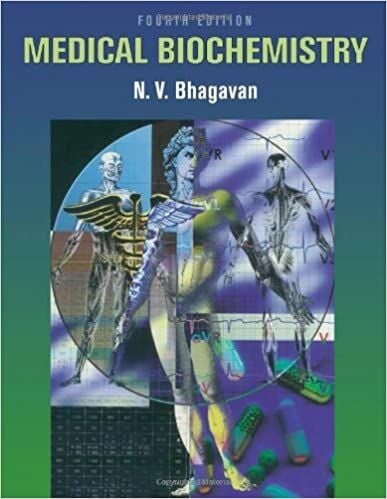
Medical Biochemistry N.V. Bhagavan 4th Edition

medical biochemistry n.v. bhagavan pdf download

Medical Biochemistry N.V. Bhagavan 4th Edition PDF Download

Medical Biochemistry N.v. Bhagavan Pdf Download

By N.V. Bhagavan

  • Revised chapters on molecular biology reflect the latest research in the field
  • Two-color throughout with four color plates
  • Reference quality appendices include practical information on clinical lab parameters used to diagnose a range of diseases
Table of Contents

Water, Acids, Bases, and Buffers.
Amino Acids.
Protein Isolation and Determination of Amino Acid Sequence.
Three-Dimensional Structure of Proteins.
Thermodynamics, Chemical Kinetics, and Energy Metabolism.
Enzymes I: General Properties, Kinetics, and Inhibition.
Enzymes II: Regulation.
Enzymes III: Clinical Applications.
Simple Carbohydrates.
Heteropolysaccharides I: Glycoproteins and Glycolipids.
Heteropolysaccharides II: Proteoglycans and Peptidoglycans.
Gastrointestinal Digestion and Absorption.
Carbohydrate Metabolism I: Glycolysis and TCA Cycle.
Electron Transport and Oxidative Phosphorylation.
Carbohydrate Metabolism II: Gluconeogenesis, Glycogen Synthesis and Breakdown, and Alternative Pathways.
Carbohydrate Metabolism III: Glycoproteins, Glycolipids, Proteoglycans and Peptidoglycans.
Proteins and Amino Acid Metabolism.
Lipids I: Fatty Acids and Eicosanoids.
Lipids II: Phospholipids, Glycosphingolipids, and Cholesterol.
Lipids III: Plasma Lipoproteins.
Muscle and Nonmuscle Contractile Systems.
Metabolic Homeostasis.
Molecular Biology I: Nucleic Acids-DNA Structure and Properties.
Molecular Biology II: DNA Replication, Repair, and Mutagenesis.
Molecular Biology III: RNA and Protein Synthesis.
Molecular Biology IV: Regulation of Gene Expression.
Nucleotide Metabolism.
Hemoglobin.
Metabolism of Heme.
Endocrine Metabolism I: Introduction.
Endocrine Metabolism II: Hypothalamus and Pituitary.
Endocrine Metabolism III: Adrenal Glands.
Endocrine Metabolism IV: Thyroid Gland.
Endocrine Metabolism V: Reproductive System.
Molecular Immunology.
Blood Coagulation and Fibrinolysis.
Mineral Metabolism.
Vitamin Metabolism.
Water, Electrolytes, and Acid-Base Balance.

Get This Book

File Size 90 MB
File Format PDF
Download  link Download Now | Go Premium, Unlock All Books
Support & Updates Contact Us | Broken Link
Join Our Telegram Channel Telegram

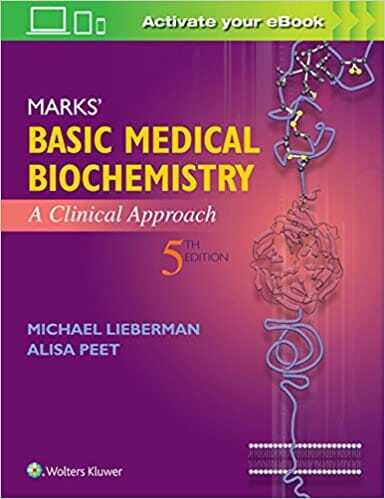
Marks’ Basic Medical Biochemistry, A Clinical Approach, 5th Edition

marks’ basic medical biochemistry a clinical approach pdf

Marks’ Basic Medical Biochemistry, A Clinical Approach, 5th Edition

Marks’ Basic Medical Biochemistry A Clinical Approach Pdf

By Michael Lieberman, Alisa Peet MD

Marks’ Basic Medical Biochemistry a Clinical Approach PDF links biochemistry to physiology and pathophysiology, allowing students to apply fundamental concepts to the practice of medicine – from diagnosing patients to recommending effective treatments. Intuitively organized chapters center on hypothetical patient vignettes, highlighting the material’s clinical applications; helpful icons allow for smooth navigation, making complex concepts easier to grasp.

  • Full-color illustrations make chemical structures and biochemical pathways easy to visualize.
  • Patient vignettes connect biochemistry to human health and disease.
  • Clinical Notes explain patient signs or symptoms, and Method Notes relate biochemistry to the laboratory tests ordered during diagnosis.Clinical Comments link biochemical dynamics to treatment options and patient outcomes.Biochemical Comments explore directions for new research.Key Concepts and Summary Disease tables highlight the take-home messages in each chapter.
  • Questions and answers at the end of each chapter – 470 total inside the book, with 560 more online – probe students’ mastery of key concepts.
  • Additional handy resources available online make it easy to review all diseases and all methods covered throughout the book and to find references for further information and study

Table of Contents

  1. Fuel Metabolism
  2. Chemical and Biologic foundations of Biochemistry
  3. Gene expression and the synthesis of proteins
  4. Carbohydrate metabolism
  5. Fuel Oxidation
  6. Generation of Adenosine triphosphate
  7. Lipid Metabolism
  8. Nitrogen Metabolism
  9. Tissue Metabolism
  10. Patient Index
  11. Subject Index

Get This Book

This Book is Avaiable for Members

Access this book instantly with a Premium membership

📄 PDF Format
⚡ Instant Delivery
Unlock Premium Access

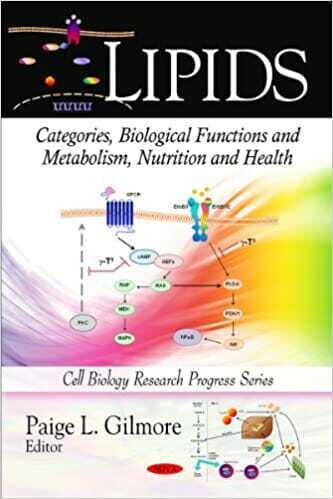
Lipids Categories, Biological Functions and Metabolism, Nutrition and Health

Lipids Categories, Biological Functions and Metabolism, Nutrition and Health PDF

Lipids Categories, Biological Functions and Metabolism, Nutrition and Health PDF

Lipids Categories, Biological Functions And Metabolism, Nutrition And Health Pdf

By Paige L. Gilmore

Lipids Categories, Biological Functions and Metabolism, Nutrition and Health PDF. The main biological function of lipids include energy storage, as structural components of cell membranes, and as important signalling molecules. Lipids are a major source of energy in the body and supply essential lipid-soluble vitamins and polyunsaturated fatty acids (PUFA) that are required in relatively high amounts during growth and life. Lipids affect the composition of membrane structures and modulate membrane functions as well as the functional development of the central nervous system. This book presents and discusses topical data on lipids including: the lipid composition of erythrocytes in cardiovascular and hepatobiliary disease; the correlation of dietary fat, fat composition and fatty acids on human nutrition; flax lipids; Vitamin E lipids with important antioxidant benefits; omega-3 fatty acids in neurochemistry; and others.

Table of Contents

  1. Preface
  2. Lipid Composition of Erythrocytes at Cardiovascular & Hepatobiliary Diseases
  3. Metabolism & Interaction of Fatty Acids, Antioxidants & Biological Active Substances in Animal Muscle & Consequent Quality of Animal Foods
  4. Flax Lipids: Classes, Biosynthesis, Genetics & the Promise of Applied Genomics for Understanding & Altering of Fatty Acids
  5. Natural Forms of Vitamin E in Breast Cancer Prevention & Treatment
  6. Brain N-3 (Omega-3) Fatty Acids in Neurochemistry, Behavior, & Mood: Implications for the Treatment & Prevention of Non-Puerperal & Postpartum Depression
  7. Bioactive Lipids
  8. Cholesterol Degradation in Food: Effects of Temperature
  9. Nisinic Acid, 24:6n-3, & other Methylene-Interrupted Very Long Chain Polyunsaturated Fatty Acids
  10. Plasma Triglycerides as Parameter in Random Mouse Mutagenesis Projects for the Generation of Novel Biomedical Animal Models
  11. Inhibitors of the 3-hydroxy-3-methylglutaryl coenzyme A reductase: beneficial & detrimental effects of statins & genetic polymorphism of cytochrome P450
  12. Index.

Get This Book

This Book is Avaiable for Members

Access this book instantly with a Premium membership

📄 PDF Format
⚡ Instant Delivery
Unlock Premium Access

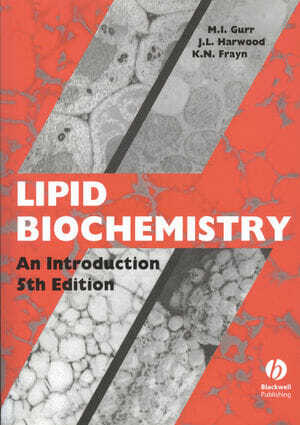
Lipid Biochemistry 5th Edition

Lipid Biochemistry 5th Edition PDF

Lipid Biochemistry 5th Edition

Lipid Biochemistry 5Th Edition Pdf

By Michael I. Gurr, John L. Harwood, Keith N. Frayn

Lipid Biochemistry 5th Edition PDF. Since the publication of the first edition of this successful and popular book in 1970, the subject of lipid biochemistry has evolved greatly and this fifth up-to-date and comprehensive edition includes much new and exciting information.

Lipid Biochemistry 5th edition has been largely re-written in a user-friendly way, with chapters containing special interest topic boxes, summary points and lists of suggested reading, further enhancing the accessibility and readability of this excellent text.

Contents include abbreviations and definitions used in the study of lipids, routine analytical methods, fatty acid structure and metabolism, dietary lipids and lipids as energy stores, lipid transport, lipids in cellular structures and the metabolism of structural lipids. The book provides a most comprehensive treatment of the subject, making it essential reading for all those working with or studying lipids.

Upper level students of biochemistry, biology, clinical subjects, nutrition and food science will find the contents of this book invaluable as a study aid, as will postgraduates specializing in the topics covered in the book. Professionals working in research in academia and industry, including personnel involved in food and nutrition research, new product formulation, special diet formulation (including nutraceuticals and functional foods) and other clinical aspects will find a vast wealth of information within the book’s pages.

Table of Contents

Preface.

Abbreviations.

Acknowledgement.

1. Lipids: definition, isolation, separation and detection.

2. Fatty acid structure and metabolism.

3. Lipids as energy stores.

4. Dietary lipids.

5. Lipid transport.

6. Lipids in cellular structures.

7. Metabolism of structural lipids.

Further reading.

Index

Get This Book

File Size 2.8 MB
File Format PDF
Download  link Download Now | Go Premium, Unlock All Books
Updates & Support Support | Browse All Categories
Become a Premium Premium Membership
More Books: Veterinary Books

Lecture Notes Clinical Biochemistry, 8th Edition

Lecture Notes Clinical Biochemistry 8th Edition PDF

Lecture Notes Clinical Biochemistry 8th Edition

Lecture Notes Clinical Biochemistry 8Th Edition

By Geoffrey Beckett, Simon W. Walker, Peter Rae, Peter Ashby

Lecture Notes Clinical Biochemistry 8th Edition PDF is a concise introduction to clinical biochemistry that presents the fundamental science underpinning common biochemical investigations used in clinical practice.

Lecture Notes Clinical Biochemistry 8th Edition PDF allows the reader to make efficient and informed use of the diagnostic services offered by their clinical biochemistry department. The result is a text that serves as a reference to the practitioner as well as the student. This Book takes a system-based approach, with the underlying physiological rationale for any test explained in the context of disruption by disease. This leads naturally to an integrated and practical understanding of biochemical diagnostics.

Including multiple choice questions (MCQs) alongside end-of-chapter case studies to help develop test-selection skills, Lecture Notes: Clinical Biochemistry provides the essential background to biochemical investigations and is an ideal course companion and revision guide for medical students, junior doctors on the Foundation Programme, general practitioners, and nurses and laboratory technicians.

Table of Contents

Preface.

List of abbreviations.

1 Requesting and interpreting tests.

2 Disturbances of water, sodium and potassium balance.

3 Acid-base balance and oxygen transport.

4 Renal disease.

5 Disorders of calcium, phosphate and magnesium metabolism.

6 Diabetes mellitus and hypoglycaemia.

7 Disorders of the hypothalamus and pituitary.

8 Abnormalities of thyroid function.

9 Disorders of the adrenal cortex and medulla.

10 Investigation of gonadal function infertility, menstrual irregularities and hirsuitism.

11 Pregnancy and antenatal screening.

12 Cardiovascular disorders.

13 Liver disease.

14 Gastrointestinal tract disease.

15 Nutrition.

16 Trauma, inflammation, immunity and malignancy.

17 Disorders of iron and porphyrin metabolism.

18 Uric acid, gout and purine metabolism.

19 Central nervous system and cerebrospinal fluid.

20 Therapeutic drug monitoring and chemical toxicology.

21 Clinical biochemistry in paediatrics and geriatrics Self-assessment MCQs.

Answers to MCQs.

Appendix: Reference ranges – SI units and ‘conventional’ units.

Index.

Get This Book

This Book is Avaiable for Members

Access this book instantly with a Premium membership

📄 PDF Format
⚡ Instant Delivery
Unlock Premium Access