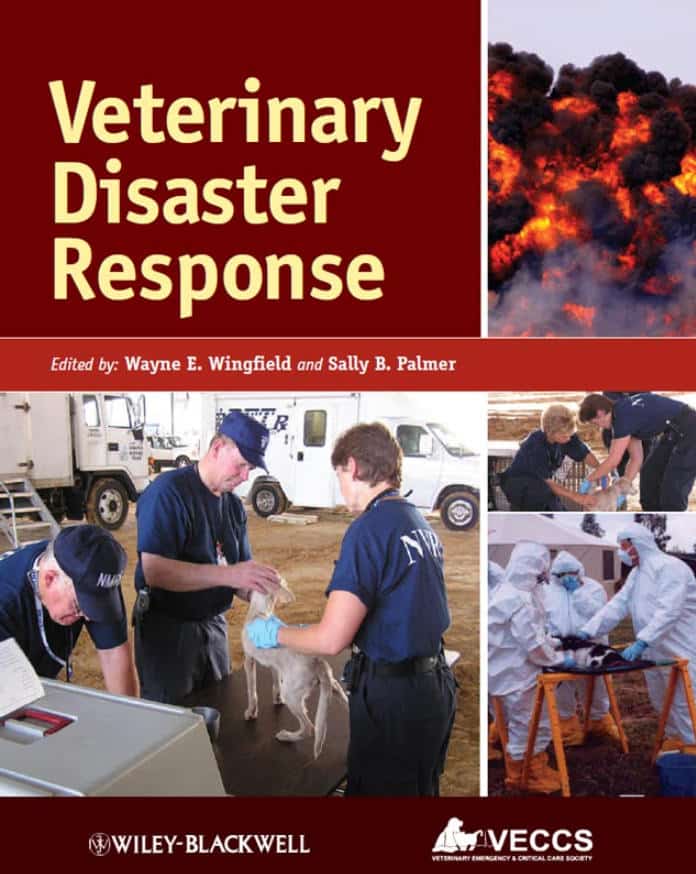
Veterinary Disaster Response is the essential guide to disaster training, preparation, planning, and recovery. The book takes a question-and-answer format to promote understanding and outline the steps for veterinary response to natural and man-made disasters. Veterinary Disaster Response is a must-have reference for anyone involved in disaster medicine, including veterinarians, veterinary technicians, veterinary students, animal control and shelter personnel, search and rescue personnel, and emergency response teams.
1.22 Disinfection of Avian, Large, and Small Animal Facilities
1.23 Pain Management in Veterinary Disaster Medicine
1.24 Humane Euthanasia of Animals
1.25 Carcass Disposal following a Veterinary Disaster
Section 2 Planning
2.1 Elements of a Disaster Plan for Animals
2.2 Disaster Planning for Private Practice
2.3 Community Animal Emergency Planning
2.4 State Response to Veterinary Disasters
2.5 State Animal and Agricultural Emergency Programs (Including State Animal Response Team [SART] Programs and State Veterinary Medical Reserve Corps [VMRC])
2.6 Federal Response to Veterinary Disasters
2.7 Military Role in Veterinary Disaster Response
Section 3 Preparation
3.1 Family versus Business during a Disaster
3.2 Preparing Your Practice for an Impending Disaster
3.3 Preparing the Farm and Animals for a Disaster
3.4 Noah’s Burden: A Prolegomenon to the Ethics of Veterinary Disaster Response
Section 4 Recovery
4.1 Care for the Caregiver: Psychological and Emotional Factors in Veterinary Disaster Response
4.2 Disaster Assistance for Homeowners, Renters, and Business Owners
4.3 American Veterinary Medical Foundation: Disaster Assistance



![Ettinger’s Textbook of Veterinary Internal Medicine 9th Edition [True PDF+Videos]](https://www.vet-ebooks.com/wp-content/uploads/2024/10/ettingers-textbook-of-veterinary-internal-medicine-9th-edition-100x70.jpg "Ettinger’s Textbook of Veterinary Internal Medicine 9th Edition [PDF+Videos]")