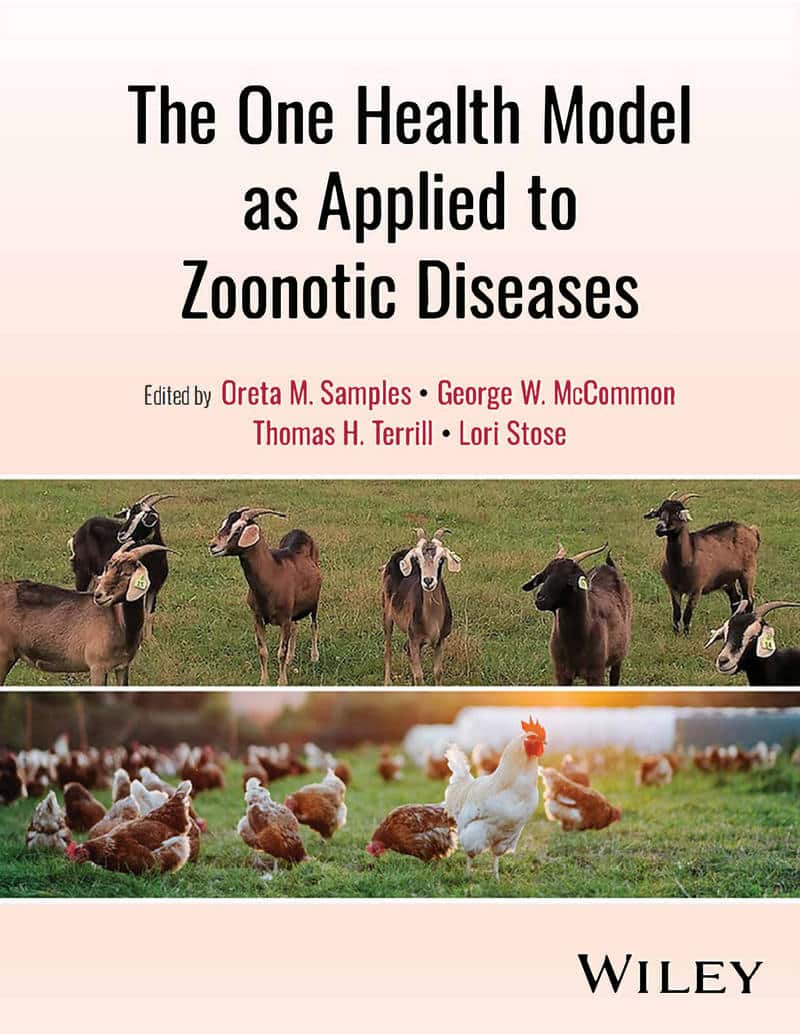
By Oreta M. Samples, George W. McCommon, Thomas H. Terrill and Lori Stose
The One Health Model as Applied to Zoonotic Diseases is an easy-to-understand yet comprehensive explanation of zoonotic healthcare concerns with coverage of diseases and medical conditions seen in North America. With a format that is consistent throughout each chapter, this book provides clinically relevant information on individual diseases, causative agents, symptomatology, diagnostics, and treatment and preventative strategies.
This book also offers an overview of the history of One Health and perspective on the future of One Health in North America.
Features
The One Health Model As Applied to Zoonotic Diseases Features:
- Arthropod-Borne Diseases, tapeworms, rabbit fever, rickettsia spp., leishmaniasis, chiggers, red bird mite, and mange
- Equine encephalitis, St. Louis encephalitis, West Nile Virus, Zika, American spotted fever, babesia, bourbon virus, Colorado tick fever, and heartland virus
- Lyme disease, Powassan encephalitis, Q-Fever, Rocky Mountain spotted fever, swimmer’s itch, and bacterial zoonotic disease
- Anthrax, cat scratch fever, campylobacteriosis, leptospirosis, psittacosis, salmonella, staphylococcus, tuberculosis, rat bite fever, hookworms, and intestinal flukes
- Newcastle disease, avian and swine influenza, foot-and-mouth disease, and creeping eruption
Table of Contents
-
History of One Health
-
An Interface Between Veterinary and Human Medicine
-
Arthropod-Borne Diseases of Public Health Concern
-
Public Health Implications of Bacterial Zoonotic Diseases
-
Fungal Zoonoses
-
Parasitic Worm-Associated Diseases of Public Health Concern
-
Viral Zoonotic Diseases
-
Reportable Diseases in the United States
-
The Future of One Health in North America










![Ettinger’s Textbook of Veterinary Internal Medicine 9th Edition [True PDF+Videos]](https://www.vet-ebooks.com/wp-content/uploads/2024/10/ettingers-textbook-of-veterinary-internal-medicine-9th-edition-100x70.jpg "Ettinger’s Textbook of Veterinary Internal Medicine 9th Edition")