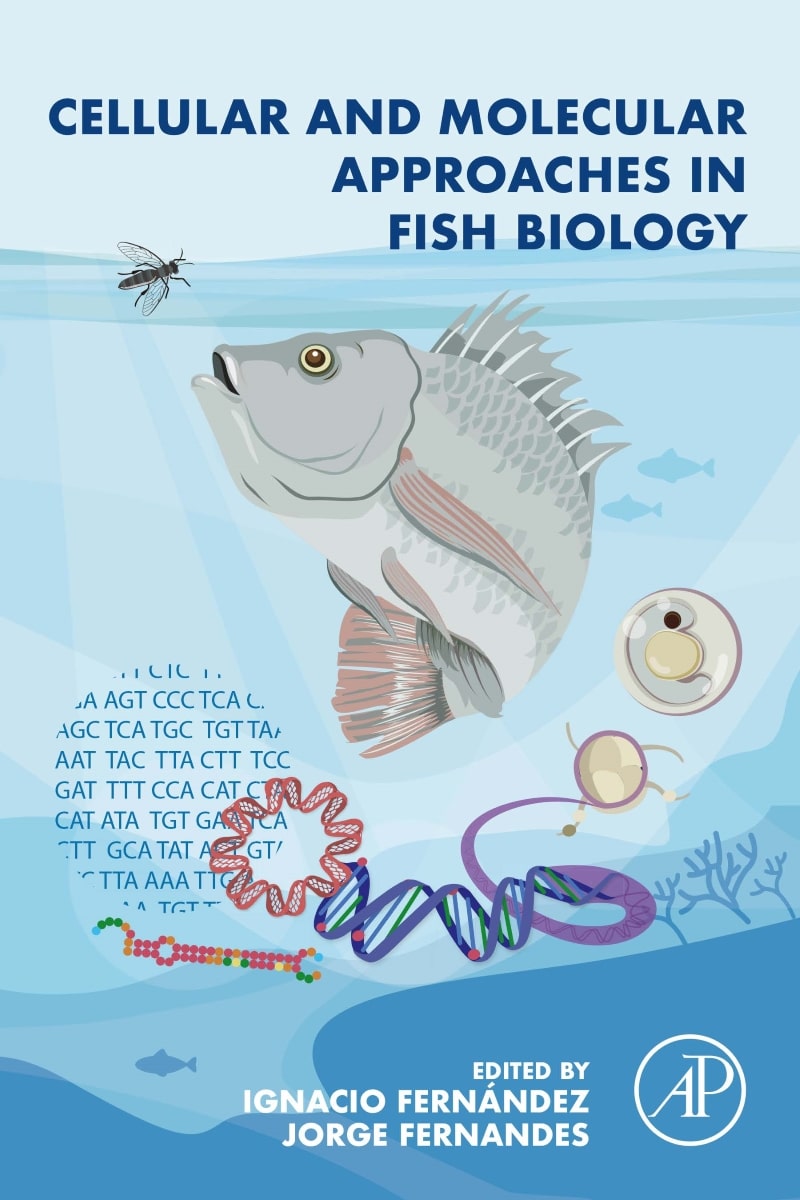
Table of Contents:
Chapter 1: Technologies and strategies for ex situ conservation of aquatic organisms: The role of cryopreservation in long-term management
- Abstract
- Acknowledgments
- Factors and steps to consider in setting up a cryopreservation protocol
- Applications of cryopreservation techniques in aquatic animals
- Cryopreservation of different biological materials to create Genome Resource Banks
- Examples of sperm cryopreservation in specific species
- Conclusions and future perspectives
- References
- Further reading
Chapter 2: Molecular approaches on DNA damage evaluation after primordial germ cell cryopreservation in zebrafish
- Abstract
- Acknowledgments
- Introduction
- Conventional DNA evaluation methods
- DNA lesion detection by qPCR: A novel approach
- Our contribution to DNA damage evaluation in cryopreserved germ cells
- Specific protocol for DNA damage evaluation in zebrafish PGCs after cryopreservation
- Summary and future perspectives
- References
Chapter 3: The role of epigenetics in fish biology and reproduction: An insight into the methods applied to aquaculture
- Abstract
- Introduction: Concept and importance of epigenetics in terms of evolution
- Epigenetic mechanisms
- The role of epigenetics in farmed fish species
- Epigenetic mechanisms in model species: A case study in zebrafish
- Techniques applied for the evaluation of DNA methylation
- Techniques applied for the evaluation of histone modifications
- Application of the epigenetic methods to our research
- References
- Further reading
Chapter 4: Noncoding RNAs in fish physiology and development: miRNAs as a cornerstone in gene networks
- Abstract
- Acknowledgments
- Noncoding RNAs
- Biogenesis and mechanisms of action of miRNAs
- Methodological approaches applied in miRNA research
- miRNAs playing key roles in fish development and physiology
- Recent progress and future perspectives
- References
Chapter 5: Nutritional epigenetics
- Abstract
- Introduction
- Epigenetic regulators
- Nutrients and metabolites influencing the epigenetic regulators
- Transfer of cell memory utilizing the epigenetic regulators
- Where do we go with nutritional epigenetics?
- References
- Chapter 6: Methods for mapping genomic variants associated with production traits in aquaculture species
- Abstract
- Introduction
- Finding causative variants through QTL mapping approaches
- Detailed description of state-of-the-art methodology: Step by step on how to perform GWAS
- Pipeline
- The next generation of association mapping methods: Multimarker models
- Implementation of QTLs and causative variants into breeding programs
- Funneling candidate variants toward causality
- Conclusions
- References
Chapter 7: Double-labeling immunofluorescence: A simple and effective tool to study pituitary regulation in teleost fish
- Abstract
- Acknowledgments
- The importance of gaining knowledge about the neuroendocrine system
- Neuroendocrine syste Double-labeling immunofluorescence
- Going deeper on the pituitary hormone regulation
- How to approach this kind of neuroendocrine study in fish?
- Summary
- References
Chapter 8: Mucosal immunology in fish
- Abstract
- Acknowledgments
- A brief introduction to the immune system in teleost fish
- Historical perspective and relevance of immunological studies in gilthead seabream
- Fish mucosal immunology
- How to alter or strengthen the fish mucosal immune system
- Methodologies to collect and preserve fish mucus
- Main questions still to be addressed
- References
Chapter 9: Characterization of the neuroendocrine stress status as part of the multiparametric assessment of welfare in fish
- Abstract
- Animal welfare
- The neuroendocrine stress response and its relation to welfare
- A proposed method to determine the stress status of fishes as part of the assessment of their welfare
- Conclusions and future perspectives
- References
Chapter 10: Evolution of ray-finned fish genomes: Status and directions with a primer on microRNA characterization
- Abstract
- Introduction
- Resources to study fish genome evolution
- Overview of fish genome evolution
- Evolutionary consequences of rediploidization—No “one size fits all”
- Transposable elements as agents of fish genome evolution
- Fish phylogenomics
- Evolution of “functional” regions in fish genomes
- A primer on miRNA evolutionary characterization
- Concluding remarks
- References
- Chapter 11: Zebrafish xenotransplantation: A versatile platform for cancer and stem cell translational research
- Abstract
- Introduction
- Larval zebrafish XT models of cancer
- Using the zebrafish for translational stem cell research
- Adult zebrafish XT models of cancer
- Conclusion
- References
- Chapter 12: Status, challenges, and perspectives of fish cell culture—Focus on cell lines capable of in vitro mineralization
- Abstract
- Acknowledgments
- A growing interest for cell lines of fish origin
- Current status of fish cell culture
- Applications for fish cell lines
- Fish cell lines capable of in vitro mineralization
- Development of bone-derived cells
- Perspectives for fish cell culture
- References
- Index






![Ettinger’s Textbook of Veterinary Internal Medicine 9th Edition [True PDF+Videos]](https://www.vet-ebooks.com/wp-content/uploads/2024/10/ettingers-textbook-of-veterinary-internal-medicine-9th-edition-100x70.jpg "Ettinger’s Textbook of Veterinary Internal Medicine 9th Edition")