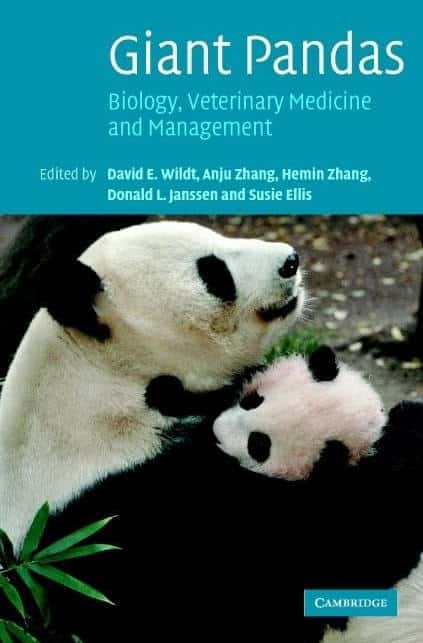
By David E. Wildt, Anju Zhang, Hemin Zhang, Donald L. Janssen and Susie Ellis
The giant panda is one of the world’s most recognized animals, but until now the biology of this threatened species has been a mystery. With the environment undergoing unprecedented change at a rapid and accelerating rate, can such a highly specialized species survive? Giant Pandas: Biology, Veterinary Medicine and Management summarizes the present state of knowledge about panda biology, encompassing topics such as reproduction, behavior, nutrition, genetics and veterinary medicine. It also provides the latest information on veterinary management, advances in neonatal care, disease detection and prevention and the use of ‘assisted breeding’ to promote reproduction and preserve genetic diversity.

Table of Contents
- Foundations and Conservation Context
- The Giant Panda as a Social, Biological, and Conservation Phenomenon
- The Giant Panda Biomedical Survey: Origins and Collaborative Value
- Reproduction and Breeding Biology
- Factors Limiting Reproductive Success
- Life Histories and Behavioural Predictors of Breeding Success
- Male Reproductive Biology in Captive Breeding Programmes
- Endocrinology and Hormone Technology in Species Management
- The Value and Significance of Vaginal Cytology
- Parentage Assessment in Captive Populations
- Nutrition, Health, and Medical Management
- Nutrition and Dietary Husbandry
- Significant Medical Issues and Biological Reference Values
- Medical Management of Adult and Geriatric Giant Pandas
- Diseases and Pathology of Giant Pandas
- Behaviour, Welfare, and Captive Management
- Behavioural Management and Biologically Relevant Environments
- Evaluating Stress and Well-Being in Giant Pandas
- Neonatal Care and Development
- The Neonatal Giant Panda: Hand-Rearing and Medical Management
- Consequences of Early Rearing on Socialization and Competence
- Diagnostic and Clinical Techniques
- Ultrasonography in Health and Reproduction Assessment
- Gastrointestinal Endoscopy in the Giant Panda
- Population Management and Future Directions
- Historical Perspective on Ex Situ Breeding in China
- Artificial Insemination and Genome Resource Banking
- Demographic and Genetic Analysis for Captive Breeding Masterplans
- Partnerships and Capacity Building for Ex Situ and In Situ Conservation
- Reference Material
- Index




![Ettinger’s Textbook of Veterinary Internal Medicine 9th Edition [True PDF+Videos]](https://www.vet-ebooks.com/wp-content/uploads/2024/10/ettingers-textbook-of-veterinary-internal-medicine-9th-edition-100x70.jpg "Ettinger’s Textbook of Veterinary Internal Medicine 9th Edition")