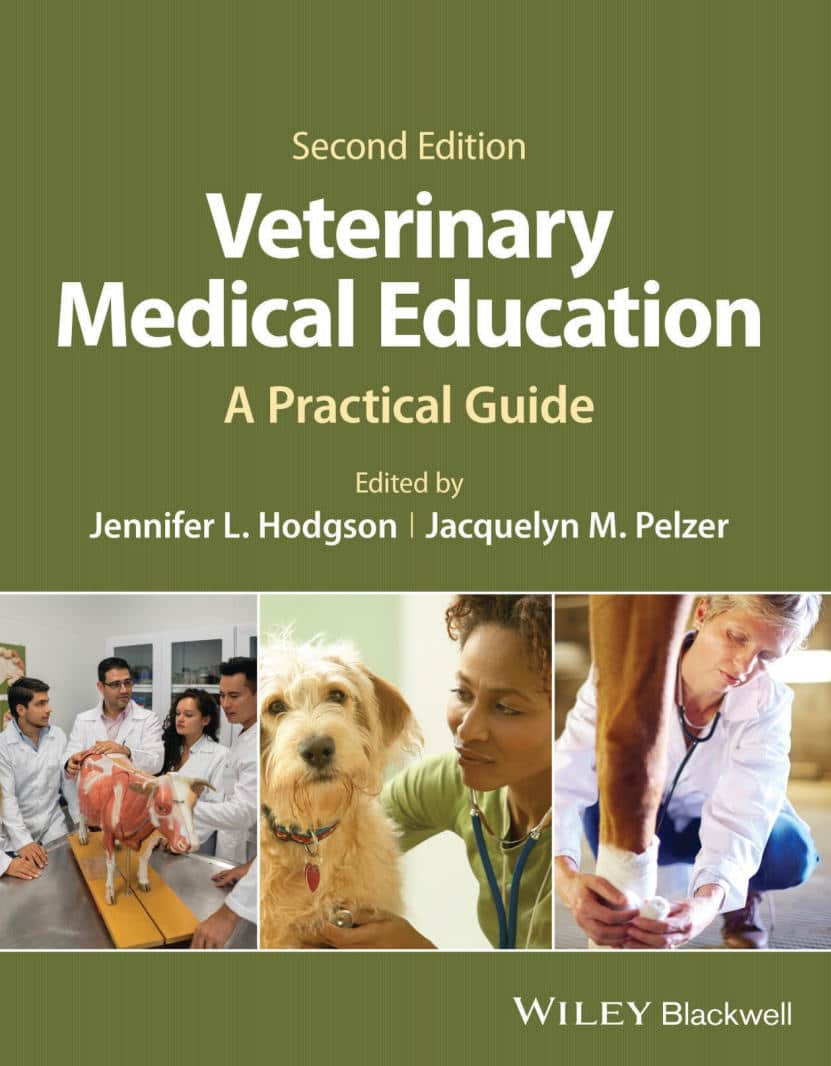
By Jennifer L. Hodgson and Jacquelyn M. Pelzer
Veterinary Medical Education: A Practical Guide, 2nd Edition offers a comprehensive reference to all aspects of veterinary medical education, providing concrete guidance for instructors in a variety of settings. The book gives real-world, practical, veterinary-specific advice on all aspects of designing and implementing a veterinary curriculum. This Second Edition includes new and expanded information on widening access on admissions, competency-based veterinary education, academic advising and student support, eLearning, transition to practice and career opportunities, educational leadership and global veterinary education.
This revised edition has been significantly enhanced and updated, featuring twelve new chapters and many expanded chapters. It includes diagrams, figures, and informational boxes that highlight key points, clarify concepts, provide helpful tips and evidence from the literature, and examples of educational innovations that could be adopted in veterinary programs.
Features
- Student selection, including widening access
- Curricular innovations and competency-based veterinary education
- Learning theories, eLearning, and their application in the classroom
- Teaching in clinical and non-clinical settings and creating safe, inclusive learning environments
- Programmatic and technology-enhanced assessment, academic advising and study skills, coaching, and mentoring
- Professionalism and professional identity, cultural humility, and transition to practice
- Program evaluation, educational leadership, and global trends
Table of Contents
- Student Selection
- Student Selection
- Widening Access to Veterinary Education Through Student Selection
- The Curriculum
- Curricular Design and Development
- Competency-based Veterinary Education
- Competency Frameworks and Milestones
- Entrustable Professional Activities
- Curriculum Mapping
- Educational Leadership and Change Management
- Learning Strategies
- Learning Concepts and Theories, and Their Application
- Integrated Learning
- Collaborative Learning
- Learning and Teaching Opportunities
- Teaching for Active Learning in Small and Large Groups
- Teaching in the Digital Age
- Teaching and Learning in Clinical Skills Laboratories
- Learning in the Veterinary Teaching Hospital
- Learning and Teaching in Real-world Settings
- Peer-assisted Learning
- Assessing the Student
- Concepts in Assessment
- Assessment Methods
- Constructive Alignment and Programmatic Assessment
- Technology-enhanced Assessment
- Coaching and Feedback
- Academic Standards and Progression
- Assessing the Program
- Assessing Individual Teaching Effectiveness and Portfolios
- Program Evaluation
- Benchmarking for Improvement
- Accreditation
- Teaching and Assessing Professional Competencies
- Clinical Communication
- Clinical Reasoning Skills
- Professionalism and Professional Identity
- Working in Professional Teams
- Interprofessionalism
- Lifelong Learning and Reflective Practice
- Animal Welfare and Ethics
- Patient Safety Culture
- Cultural Humility
- Business and Practice Management Skills
- Career Development
- Employability and Transition to Practice
- The Educational Environment
- Safe and Inclusive Learning Environment
- The Hidden Curriculum
- Student Support and Wellness
- Academic Advising and Success Strategies
- Students with Disabilities
- Learning to Teach
- Practical Educational Research
- Global Veterinary Education and Future Directions
- Trends in Global Veterinary Medical Education
- Envisioning the Future




![Ettinger’s Textbook of Veterinary Internal Medicine 9th Edition [True PDF+Videos]](https://www.vet-ebooks.com/wp-content/uploads/2024/10/ettingers-textbook-of-veterinary-internal-medicine-9th-edition-100x70.jpg "Ettinger’s Textbook of Veterinary Internal Medicine 9th Edition")