back to top

Exclusive Deal: Get Lifetime Access with One-Time Payment - Free Lifetime Updates

Never Miss a New Book
Sign Up Now
HomeAnimals BooksEquineApplied Equine Ethology in the Clinical Environment

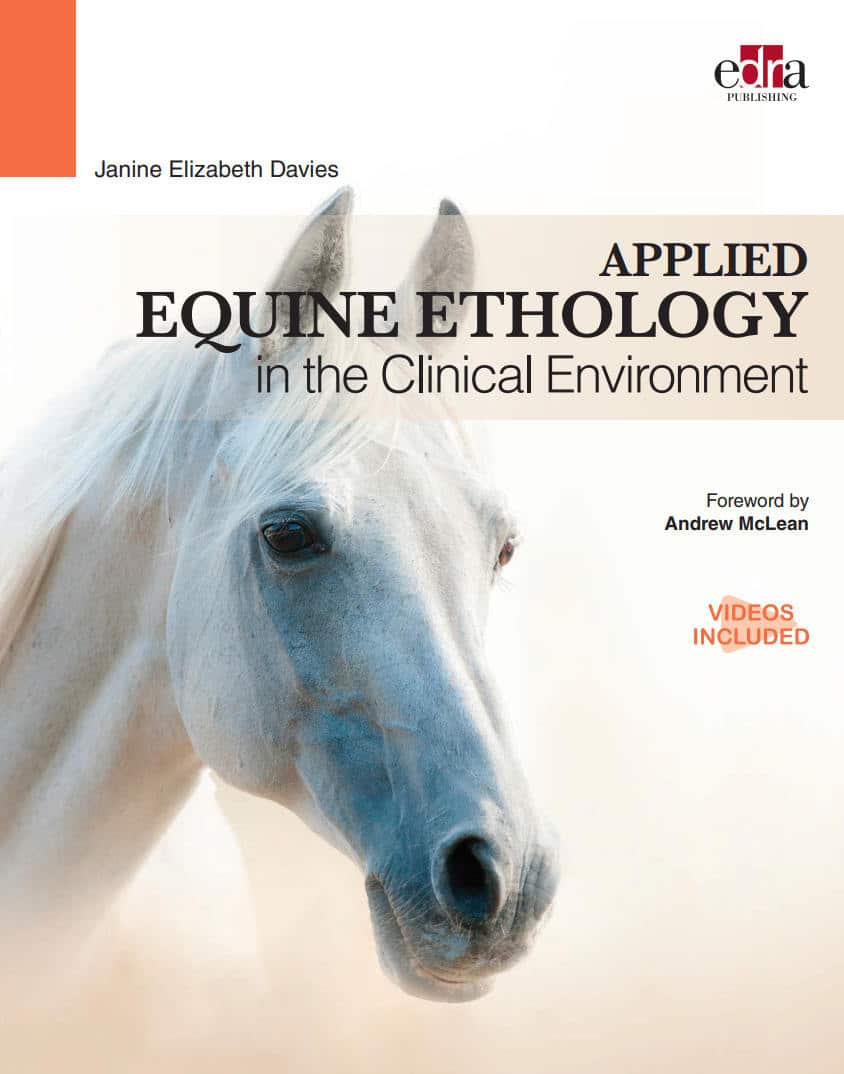
Applied Equine Ethology in the Clinical Environment

-

Applied Equine Ethology In The Clinical Environment

By Janine Davies

The aim of this book is to create awareness of how to apply existing methodologies, new techniques and practices that enhance all aspects of equine behaviour and welfare. This will subsequently reduce arousal states and diminish flight and fight responses.

Table of Contents
  • Section 1 – Managing the Equine Patient
  • The Equine Patient
  • – The Senses
  • – Vision
  • – Touch
  • – Hearing
  • – Smell
  • – Taste
  • Recognition of Pain
  • – Pain Assessment
  • – Pain Indicators
  • – Facial Expressions of Pain
  • Chemical Restraint
  • – Neuroleptanalgesia
  • – Multimodal Analgesia
  • Physical Restraint
  • – Examination Stocks
  • – Lip Twitching
  • Section 2 – Learning Theory
  • How the Horse Learns
  • – Social Learning
  • – Operant Conditioning
  • – Response Consolidation
  • – Extinction
  • – Classical Conditioning
  • – Stimulus Control
  • – Impact of Domestication
  • Negative Reinforcement
  • – Use of Negative Reinforcement
  • – Negative Reinforcement Toolkit
  • – How to Use Less Pressure
  • – Application of Negative Reinforcement
  • – Incorrect Application of Negative Reinforcement
  • Positive Reinforcement
  • – Positive Reinforcers
  • – Clicker Training
  • – Cautions on Positive Reinforcement
  • Desensitisation Techniques
  • – Systematic Desensitisation
  • – Counterconditioning
  • – Overshadowing
  • – Approach Conditioning
  • – Stimulus Blending
  • Behaviour Modification
  • – Guidelines for Behaviour Modification
  • – Assessing the Current Situation
  • – Assessing Individual Tendencies
  • – Choosing Appropriate Strategies
  • – Behaviour Modification in the Clinical Environment
  • Section 3 – Applied Learning Theory in Equine Clinical Procedures
  • Gaining Stimulus Control
  • – Case Study: Helios
  • Desensitisation to Clippers
  • – Case Study: Helios
  • Training Immobility
  • – Case Study: Harold
  • Head Control and Desensitisation of Related Structures
  • – Case Study: Princess
  • Overshadowing Technique
  • – Case Study: Balio
  • Counterconditioning to an Oral Syringe
  • – Case Study: Castaño
  • Desensitisation to a Rectal Thermometer
  • – Case Study: Rocky
  • Desensitisation to Bandage Material
  • – Case Study: Rubio
  • Further Reading

Get This Book

This Book is Avaiable for Members

Access this book instantly with a Premium membership

📄 PDF Format
⚡ Instant Delivery
Unlock Premium Access